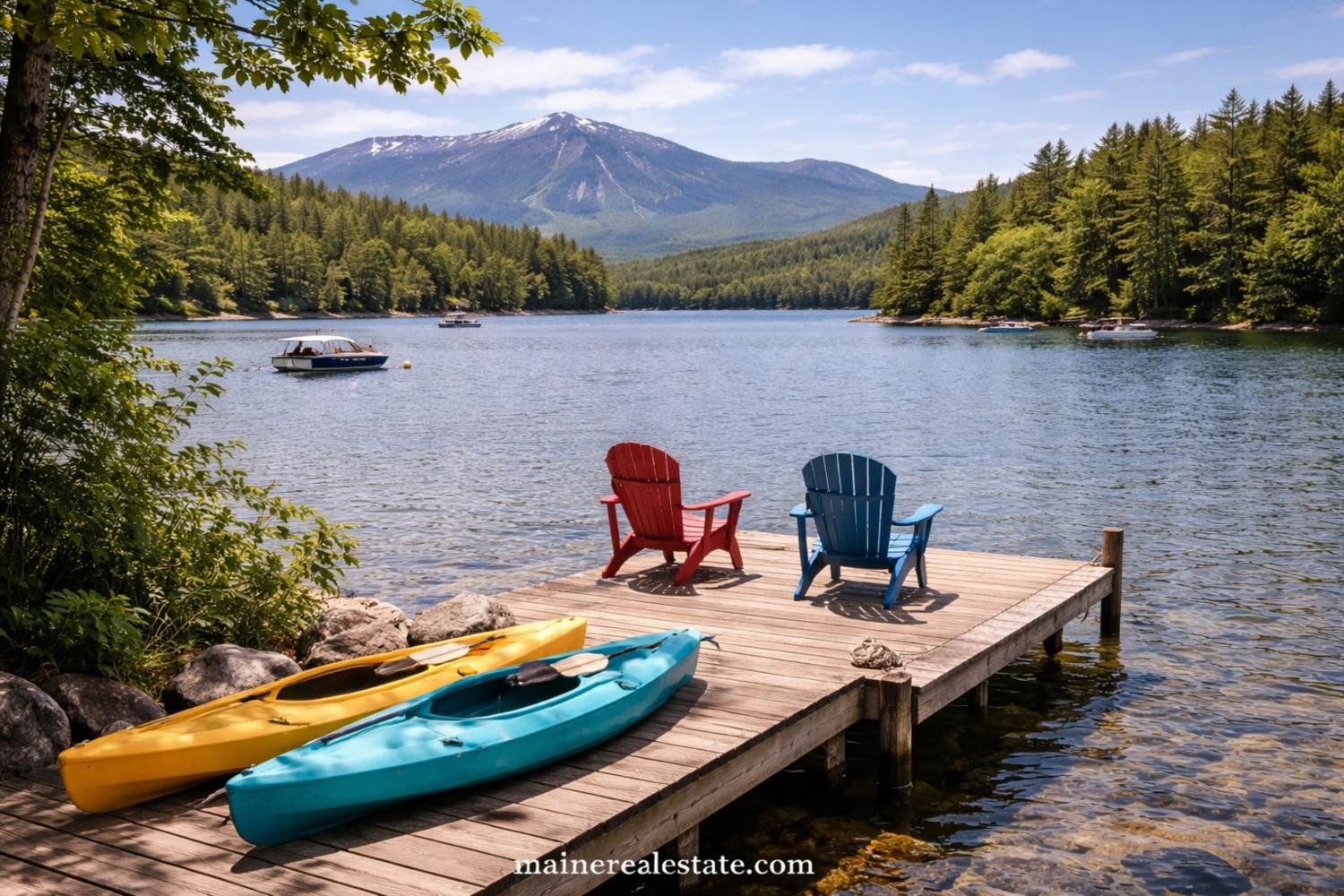
If you’re searching for Western Maine real estate that combines natural beauty, recreational opportunity, and genuine community character, you’ve found your region. Western Maine stands apart from the rest of the state, and the Northeast, as a rare pocket where mountains meet pristine lakes, outdoor adventure is woven into daily life, and home values remain remarkably accessible compared to other seasonal destinations.
Whether you’re drawn to Sebago Lake’s sparkling waters, the ski trails around Sunday River and Bethel Maine, or the quiet charm of Rangeley’s alpine setting, Western Maine offers something for nearly every buyer. This is a place where you can own a piece of paradise without sacrificing financial sense. Let’s explore what makes this region so special and what you should know before investing in Western Maine real estate.
The Western Maine Advantage: Why This Region Is Different
Western Maine occupies a unique position in the real estate market. Unlike coastal properties in southern Maine that command premium pricing, or the sprawling developments of central New England, Western Maine preserves a sense of wild authenticity. The region stretches from the foothills of the Oxford Hills in the south to the high country around Rangeley in the north, creating a geography that supports both summer lake culture and winter mountain life.
The appeal here runs deeper than scenery. Western Maine real estate offers features for those who value:
- Four-season recreation: Skiing in winter, paddling and fishing in summer, hiking year-round, fall foliage that rivals anywhere in New England
- Affordable mountain living: Compared to similar ski towns in Vermont or New Hampshire, Western Maine properties offer better value
- Genuine community: Small towns where people actually know their neighbors, not sprawling subdivisions
- Remote work potential: Broadband availability in key areas has opened Western Maine to professionals seeking lifestyle flexibility
- Investment diversity: Whether you want a year-round residence, vacation retreat, or rental property, the market supports multiple ownership models
This combination, affordability, access, community, and recreational opportunity, explains why Western Maine real estate has gained serious attention from buyers across New England and beyond.
Ready to Explore Western Maine Real Estate?
Our team understands the nuances of each region. Let’s discuss what Western Maine community aligns with your lifestyle vision.
Sebago Lake: Maine’s Premier Summer Destination
Sebago Lake dominates the southern tier of Western Maine’s real estate market. As Maine’s second-largest lake, Sebago stretches across more than 45,000 acres and represents the heart of the region’s lake home market. The town of Casco, Naples, and the surrounding communities have built their entire identity around this water.
Sebago Lake Real Estate Market Overview
Sebago Lake homes range dramatically in style and price. You’ll find modest lakefront cottages that have been in families for generations, contemporary homes with dock access and modern amenities, and grand estates with multiple buildings and commanding views. The market here reflects the lake’s dual identity: a working waterfront community and a well-appointed vacation destination.
Waterfront pricing on Sebago Lake typically ranges from $600,000 to $2.5 million, depending on acreage, view quality, and home condition. A charming 1970s cottage with 75 feet of frontage might list for $750,000, while a newly renovated contemporary with 150 feet of pristine south-facing shoreline could command $1.8 million or more.
Nearshore properties, homes a short distance from the lake but without direct waterfront access, offer a middle ground. These properties typically range from $400,000 to $900,000 and provide lake access through neighborhood beaches or boat launches without the premium associated with direct ownership.
Village living in Naples and surrounding towns appeals to those who want the Sebago Lake lifestyle without waterfront ownership. These residential neighborhoods within 5 to 10 minutes of the lake run $350,000 to $700,000 and offer a quieter, more affordable approach to the region.
The Sebago Experience
Living on or near Sebago Lake means embracing a water-centric lifestyle. Summer weekends bring sailboats, fishing charters, and swimmer-filled beaches. The lake supports a robust rental community, many owners generate substantial income by renting their properties during peak season while retaining personal use weeks.
For those considering Sebago Lake homes as investment properties, the numbers work. A three-bedroom lakefront home that rents for $3,000 to $4,500 per week during summer can generate $45,000 to $60,000 in annual rental income during a 12 to 15 week peak season. Many owners offset their carrying costs entirely through seasonal rental programs.
The challenge? Off-season brings a different energy. Winter is quiet, genuinely quiet. Spring comes late. If you require consistent activity and social engagement, pure waterfront living may feel isolating November through April. But for those seeking peaceful solitude punctuated by intense summer activity, it’s precisely the appeal.
Bridgton and Naples: Charming Villages with Real Vitality
Bridgton and Naples deserve particular attention within Western Maine’s real estate landscape because they’ve managed something increasingly rare: they’ve remained authentic New England villages while attracting a growing population of newcomers.
Bridgton’s Renaissance
Bridgton, the larger of the pair, sits about 45 minutes north of Portland. The town has undergone a genuine renaissance over the past decade. Historic homes along the downtown commercial district have been renovated into offices, restaurants, and small businesses. Main Street actually feels alive, hosting seasonal markets, festivals, and gathering spaces that reflect genuine community life rather than tourist simulation.
Real estate in Bridgton runs the gamut:
- Historic Victorians and Colonials: Substantial 3,000+ square foot homes from the 1800s, many recently updated, priced $350,000 to $650,000
- Newer residential properties: 2,000 to 2,500 square foot contemporary construction on 1 to 3 acres, $400,000 to $600,000
- Commercial and mixed-use: Main Street buildings that appeal to both investors and owner-operators, $200,000 to $500,000+
What makes Bridgton particularly attractive for Western Maine real estate investment is the emergence of newcomers and remote workers who’ve chosen the town specifically for its schools, walkable downtown, and outdoor access. This demographic shift suggests real staying power rather than seasonal volatility.
Naples: Beach Town Without the Beach Town Prices
Naples sits directly on Sebago Lake but maintains a distinctly different character from pure waterfront communities. The town combines lake access with genuine village charm and considerably more affordable pricing than Sebago’s premium waterfront areas.
A typical Naples property offers what many Western Maine real estate buyers seek: lakefront or lake-adjacent living without the six-figure price premiums. You might find a 2-bedroom cottage with lake views and dock access for $550,000 to $700,000, significantly less than comparable Sebago Lake waterfront properties.
Oxford Hills: Hiking, History, and Hidden Values
South of the Sebago Lake region, the Oxford Hills represent a quieter, less-saturated corner of Western Maine real estate. This area encompasses towns like Paris, Norway, and South Paris and appeals specifically to buyers who want mountain views, hiking access, and small-town living without the seasonal intensity.
Oxford Hills real estate tends to be 15 to 20% more affordable than comparable Sebago Lake properties. A 3-bedroom, 2-bath home on 2 to 3 acres with mountain views might list for $350,000 to $500,000 in this area, whereas the same property near Sebago could command $450,000 to $650,000.
The tradeoff? Less water-based recreation and slightly longer drives to major services. But for those building permanent homes, establishing deep community roots, or seeking privacy and land, the Oxford Hills offer genuine value within Western Maine real estate.
Bethel and the Sunday River Corridor: Ski Country Investment
If ski season defines your real estate priorities, Bethel and the Sunday River area represent Maine’s premier mountain destination. The Sunday River ski area draws over 200,000 visitors annually, creating a robust real estate market built around seasonal rental demand.
The Sunday River Effect
Sunday River’s influence on Western Maine real estate cannot be overstated. The ski area anchors a four-town corridor, Bethel, Newry, Hanover, and Byron, creating distinct real estate dynamics. Property values and rental demand spike within a 10 to 15 minute drive of the ski area base lodge.
Ski-in/Ski-out properties at Sunday River village developments command premium pricing: $400,000 to $800,000 for condominiums, $800,000 to $1.5 million for single-family homes. These properties offer the ski resort lifestyle but lack the land, privacy, and autonomy of non-resort homes.
Near-slope properties, homes within 5 to 10 minutes of Sunday River that retain independence from resort governance, typically range $350,000 to $700,000 and attract buyers seeking ski access without HOA restrictions.
Rural mountain homes 20 to 30 minutes from Sunday River offer the most affordable entry into Western Maine mountain real estate. A 3-bedroom home on 1 to 2 acres of forested land costs $250,000 to $400,000, providing mountain living at rural prices.
Bethel Maine: Year-Round Mountain Village
Bethel has transcended its ski-town identity to become a genuinely attractive year-round destination. The Sunday River Brewing Company, farm-to-table restaurants, and an increasingly robust arts and cultural scene have built a town that works beyond the winter ski season.
Real estate in Bethel proper spans:
- Historic downtown properties: Converted inns and Victorian homes now serving as residences, $400,000 to $700,000
- Residential neighborhoods: 2 to 3 bedroom homes on 0.5 to 1.5 acres, $300,000 to $550,000
- Outlying rural properties: Land and homes with views and privacy, $200,000 to $450,000
What distinguishes Bethel Maine real estate is the emergence of residential stability. Newcomers, artisans, small business owners, and remote workers are choosing to live here year-round, not just seasonally. This fundamentally changes the character of the community in ways that benefit property values.
Rangeley Lakes: High Country Serenity
At roughly 2,000 feet elevation, Rangeley occupies a distinct ecological niche within Western Maine. The region feels different, cooler summers, deeper winter snows, alpine forest rather than lowland deciduous woodland. For some buyers, this is exactly the environment they’ve been seeking.
The Rangeley Equation
Rangeley Maine real estate appeals to a specific buyer profile: those willing to accept longer winters, greater isolation, and reduced seasonal activity in exchange for genuine mountain character and affordability.
Real estate pricing reflects Rangeley’s geographic reality:
- Rangeley Lake waterfront: $400,000 to $900,000 depending on acreage and condition
- Village residential properties: $250,000 to $450,000 for 2 to 3 bedroom homes
- Rural properties and land: $100,000 to $300,000 for 1 to 3 acre lots
The appeal here is straightforward: you’ll pay significantly less than equivalent properties near Sebago or Sunday River, and you’ll have genuine solitude and space. The tradeoff is limited amenities, longer drive times to major services, and a community that experiences genuine winter.
Rangeley attracts those seeking privacy, remote workers who embraced pandemic-era flexibility, and outdoor enthusiasts for whom proximity to mountains and pristine lakes outweighs convenient shopping.
Fryeburg: Gateway to White Mountain Recreation
Fryeburg occupies a sweet spot geographically, close enough to Boston for weekend access, positioned at the base of mountain recreation, but distinctly removed from coastal Maine’s seasonal crowds. The town serves as a gateway between Maine and New Hampshire’s White Mountains.
Fryeburg real estate reflects this transitional identity. Prices run slightly higher than pure mountain towns ($350,000 to $600,000 for residential properties) but below Sebago Lake premium coastal pricing. The appeal centers on mixed recreation: mountain access, lake recreation (Fryeburg sits on the Saco River and multiple ponds), and proximity to both mountains and ocean.
Understanding Western Maine Real Estate Pricing and Value
To make smart decisions about Western Maine real estate, understanding what drives pricing is essential.
The Four-Season Premium
Water-based properties command dramatic seasonal premiums. A Sebago Lake waterfront home lists for 40 to 60% more per square foot than comparable non-waterfront properties. But those premiums compress in winter when recreational demand collapses.
For investors, this creates opportunity. Purchasing non-waterfront properties during off-season and marketing aggressively for summer rental can generate strong returns without waterfront investment costs.
Mountain vs. Valley Geography
Properties with genuine mountain views, open-face elevations with south or west exposure, cost 15 to 25% more than comparable nearby properties without views. This is a justified premium: views create emotional connection and resist market downturns better than blind properties.
Community Access and Walkability
Properties a short distance from downtown commercial districts (Bridgton, Bethel, Naples village) command 10 to 15% premiums over similar properties 5+ miles away. This reflects broader real estate trends: walkability and community access increasingly matter to buyers.
Condition and Renovation Readiness
Western Maine’s inventory includes genuine fixer-uppers, properties that require substantial work, often listed $30,000 to $100,000 below comparable renovated homes. For buyers with contractor relationships and project tolerance, these represent significant value opportunities.
Need Help Evaluating a Property?
Understanding your property’s true value is crucial. Use our home value tool to get started, or contact our team for a detailed market analysis.
Year-Round vs. Vacation Home Ownership
One critical decision every Western Maine real estate buyer faces: are you purchasing a year-round primary residence or a vacation/investment property?
Year-Round Living Advantages
- No seasonal migration hassles
- Genuine community integration
- Build relationships and commitment
- Avoid seasonal premium pricing
- Access to schools and services year-round
Vacation/Investment Property Advantages
- Minimize personal use carrying costs through rental income
- Avoid winter weather and maintenance
- Maintain primary residence elsewhere
- Build real estate portfolio
- Generate passive income
Neither approach is “better”, they’re simply different. But many Western Maine real estate purchases fail because buyers underestimate the reality gap between vacation-home fantasy and year-round responsibility. Before purchasing, honestly assess whether you’ll embrace winter, community involvement, and year-round property management.
The Remote Work Revolution and Western Maine Real Estate
One of the most significant shifts in Western Maine real estate over the past 5 to 7 years has been the emergence of remote workers as a major buyer demographic. Pandemic-era flexibility normalized work-from-home arrangements, suddenly making small mountain towns accessible to professionals previously tied to urban centers.
This shift has meaningful implications:
Broadband accessibility: Major towns including Bethel, Bridgton, and Naples now support high-speed internet (50+ Mbps), making serious remote work viable. Rangeley and rural areas lag behind, a real limitation for connectivity-dependent work.
Demographic diversification: Towns that once skewed heavily toward seasonal residents now include newcomers, entrepreneurs, and professionals. This changes community character, supports local schools and businesses, and stabilizes real estate values.
Pricing pressures: Increased demand from remote workers has pushed entry-level Western Maine real estate prices up 20 to 30% over five years. Properties under $350,000 move quickly in popular towns.
If remote work flexibility is your situation, Western Maine offers genuine lifestyle-cost arbitrage: move somewhere dramatically more beautiful than your previous location while maintaining your urban-level income.
Community Character and Lifestyle Integration
Western Maine’s defining characteristic isn’t geographic features or market dynamics, it’s community character. These aren’t anonymous sprawling suburbs. They’re towns where:
- Local restaurants source from regional farmers
- Town meetings determine community priorities in real democratic participation
- Local schools include multi-generational residents with real roots
- Outdoor recreation isn’t a weekend escape but daily lifestyle
- Seasonal rhythms, winter quiet, summer intensity, fall celebrations, structure the year
This character is real and valuable, but it’s also fragile. Communities change when newcomers don’t integrate. Before purchasing Western Maine real estate, consider honestly: will you participate in community life, support local businesses, attend town events? Or will you remain an absentee owner extracting rental value?
The difference determines both your experience and your property’s long-term value.
Investment and Rental Market Dynamics
Western Maine real estate offers meaningful investment potential, particularly for vacation rental properties.
Summer rental market: Properties with lake access or mountain views rent $2,500 to $4,500 per week during July-August. A property renting 12 to 15 weeks generates $30,000 to $67,500 in gross revenue.
Winter rental market: Ski season (December-March) drives premium pricing near Sunday River. Properties rent $200 to $350 per night, or $1,400 to $2,450 per week. A property renting 8 to 12 weeks generates $11,200 to $29,400 in winter revenue.
Shoulder season: Spring and fall see reduced demand, generally 30 to 50% of peak pricing.
Realistic expectations: Gross rental income of $40,000 to $70,000 annually is achievable with well-positioned properties. After expenses (property taxes, maintenance, insurance, property management, utilities, cleaning), net cash flow typically ranges 20 to 30% of gross revenue.
The math works best when you have:
- Strong location (lake access, ski proximity, or town walkability)
- Ability to complete renovations that justify premium nightly rates
- Tolerance for active property management or resources to hire it
- Multiple seasonal income periods (summer lake + winter ski, for example)
Navigating Seasonal Extremes and Climate Considerations
Western Maine’s climate brings genuine seasonal challenges worth understanding before purchasing.
Winter reality: Expect 80 to 120 inches of annual snowfall. Roads require frequent plowing. Residents with limited mobility can face genuine isolation. Off-season heating costs run $150 to $300 monthly. Pipes and septic systems require winterization in many areas.
Spring mud season: The period from March through May brings “mud season”, roads become nearly impassable, ground is oversaturated, and the landscape looks decidedly unglamorous. This tests psychological resilience.
Insect season: Blackflies (May-June) and mosquitoes (June-August) are legitimate. Screen porches and bug spray are standard equipment, not optional amenities.
Isolation reality: Winter reduces social interaction significantly. This appeals to solitude-seekers but can trigger seasonal affective disorder in some personalities.
These aren’t dealbreakers, millions choose to live with these conditions, but they’re essential realities for informed decision-making. If you’ve never experienced genuine winter, spend November through March in Western Maine before purchasing.
The Path Forward: Finding Your Western Maine Real Estate
Starting your Western Maine real estate search requires honest self-assessment:
Define your priorities: Water or mountains? Year-round or seasonal? Community-embedded or private property? Investment income generation or personal use?
Establish your timeline: Seasonal properties move fastest July-August and December-January. Off-season purchases often yield better pricing but limited inventory.
Understand local nuance: Each area, Sebago Lake, Bridgton, Bethel, Rangeley, has distinct character. Spend meaningful time in your target area across multiple seasons before committing.
Work with local expertise: Real estate agents embedded in Western Maine communities understand local dynamics, seasonal market shifts, and community character in ways national databases cannot capture.
Assess connectivity: If remote work matters, confirm broadband capability in writing before purchasing, particularly outside major towns.
Build inspection into your timeline: Seasonal properties often present hidden issues that manifest seasonally. Summer purchases may miss winter problems; winter purchases may miss spring water and foundation concerns.
Frequently Asked Questions About Western Maine Real Estate
What’s the best time to buy Western Maine real estate?
Off-season (November-April) typically offers better pricing and less competition, though inventory is more limited. Peak season (July-August and December-January) shows more listings but commands premium prices. Your answer depends on whether you prioritize selection or value. Most savvy investors target shoulder seasons (May-June, September-October) for balanced opportunity.
Is Western Maine real estate a good investment?
Western Maine offers solid investment potential if you understand the market nuances. Vacation rental properties in strong locations (lake access, ski proximity, town walkability) generate meaningful income. However, success requires strong location selection, property condition, and active management. Properties in secondary locations struggle to generate returns. Work with local real estate expertise to identify genuine opportunities.
What’s the difference between Western Maine and Southern Maine real estate?
Western Maine emphasizes mountains, lakes, and seasonal recreation, with properties ranging $250,000 to $1.5 million. Southern Maine features coastal properties, communities, and year-round lifestyle, with premium waterfront pricing. Learn more about both regions in our Southern Maine real estate guide and our outdoor living guide.
Can I work remotely from Western Maine?
Major towns (Bethel, Bridgton, Naples) support reliable high-speed broadband, making remote work viable. Rural areas lag significantly. Before purchasing, confirm broadband capability in writing with your internet provider. Don’t rely on seller assurances or “coming soon” promises. Western Maine’s remote work potential is one of its fastest-growing attractions. See our relocation guide for more details.
How much can I expect to earn renting a Western Maine property?
Well-positioned properties generate $40,000 to $70,000 in gross annual rental income. After expenses, net cash flow typically ranges 20 to 30% of gross revenue. Summer lake rentals ($2,500 to $4,500 per week) and winter ski rentals ($1,400 to $2,450 per week) offer the strongest returns. Success depends on location, property condition, and management capability.
Is Western Maine good for first-time homebuyers?
Western Maine offers affordable entry points compared to coastal Maine. Properties range from $250,000 in rural areas to $1+ million near premium locations. First-time buyers should focus on primary residence goals rather than investment returns. Check out our first-time buyer guide for broader Maine context and our home value tool to understand your budget.
What should I know about Western Maine winters before buying?
Western Maine experiences genuine winters with 80 to 120 inches of annual snowfall, temperatures dropping well below zero, and significant off-season isolation. If you’ve never experienced this, rent in the area from November through March before purchasing. Winter challenges aren’t dealbreakers, as millions thrive in these conditions, but they’re essential realities. Budget $150 to $300 monthly for heating, and plan for winter property maintenance.
How does Western Maine real estate compare to Portland area housing?
Western Maine properties are significantly more affordable than Portland, though less convenient for urban workers. Check our Portland guide and our home values analysis to compare market dynamics between regions. Remote workers seeking affordability and recreation often find Western Maine compelling; those prioritizing urban access prefer Portland.
Conclusion: Building Your Western Maine Story
Western Maine real estate isn’t just property, it’s access to a lifestyle increasingly rare in modern America. It’s the possibility of knowing your neighbors, of seasonal rhythms that match natural cycles, of mountains visible from your home and pristine water within 20 minutes.
The region’s affordability compared to equivalent mountain real estate elsewhere in New England, combined with its four-season recreational opportunities and genuine community character, makes Western Maine genuinely unique.
Whether you’re drawn to Sebago Lake’s sparkling waters, Sunday River’s mountain terrain, Rangeley’s alpine solitude, or charming villages like Bethel and Bridgton, Western Maine offers the possibility of building something meaningful. Not a vacation fantasy that fades when you return to your real life, but an authentic integration between home, community, and landscape.
The market is active, inventory is available, and conditions support both owner-occupancy and investment. Now is a genuinely good time to explore what Western Maine real estate might offer you.
Your Maine Adventure Awaits
Let’s discuss what Western Maine real estate opportunity aligns with your vision. Our team has deep roots in these communities and understands the nuances that matter to buyers like you.