
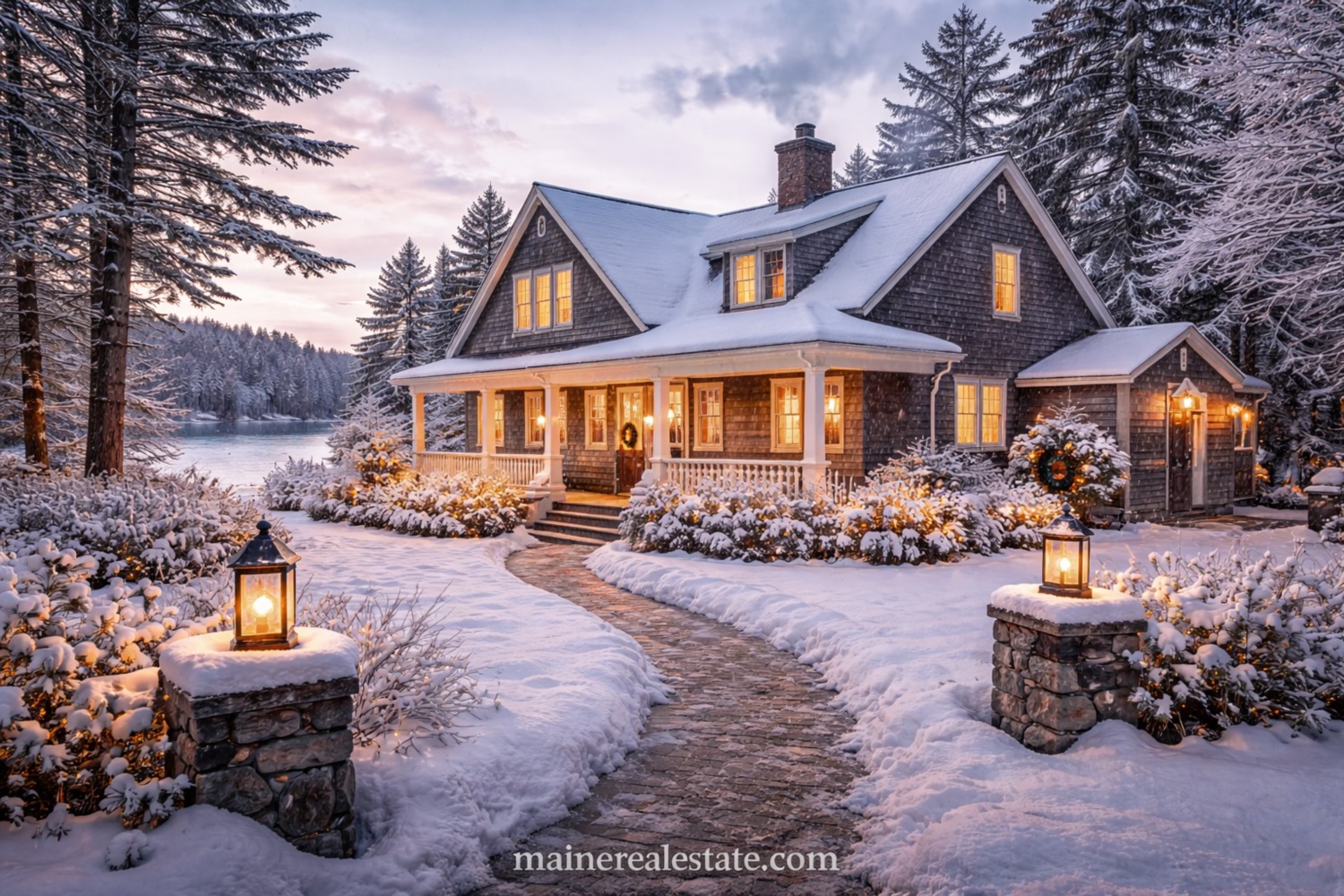
When you move to Maine, or decide to stay year-round, winter isn’t just a season. It’s a character-building experience, a test of preparation, and honestly, one of the most rewarding challenges you’ll face as a homeowner. I’ve watched newcomers arrive in September with confidence, only to emerge from March looking both battle-tested and surprisingly satisfied. That’s the Maine winter paradox: it’s brutal, beautiful, and ultimately unforgettable.
This guide covers everything you need to know about navigating winter in Maine successfully. Whether you’re a prospective buyer evaluating the reality of Maine winters, a new resident bracing for your first season, or an established homeowner looking to optimize your approach, you’ll find practical advice grounded in both experience and expertise.
Understanding Maine Winters: Separating Myth from Reality
Before we dive into the how-to’s, let’s talk about what Maine winters actually entail. Too many people arrive with a romanticized notion of cozy snow-covered landscapes, only to be shocked by the complexity of it all.
The Real Facts About Maine Winter Weather
Maine winters are long. We’re not talking about three months. Real winter, the kind where you need full cold-weather infrastructure, runs from November through April. That’s six months of serious cold. Some years, the mercury drops below zero for weeks at a time. Other years, you get a misleading warm spell in February that tricks the trees into budding, followed by a killing frost. This unpredictability is itself a kind of reality check.
Snowfall varies dramatically by region. This is crucial to understand when considering where in Maine you want to live. A property in coastal York County might see 40 to 50 inches of snow annually, while the same year, Aroostook County in the far north experiences 150+ inches. Your heating bills, your driveway maintenance, your commute reliability, all depend heavily on where in Maine you plant yourself.
It’s genuinely cold for extended periods. While Maine doesn’t typically rival the Arctic, sustained temperatures in the teens and single digits are common. Wind chill is real. Exposed skin freezes. This isn’t theoretical, it’s the baseline condition you’re adapting to.
Winter weather is often wet and heavy. Maine doesn’t get the light, powdery snow of the interior west. Our snow is frequently wet and dense, perfect for sticking to power lines and trees, and harder on your back when shoveling. Later winter snows can be particularly sloppy.
Regional Variations Across Maine
Understanding regional climate differences is essential when choosing where to live in Maine.
Coastal Maine (Portland, Bar Harbor, parts of southern Maine) benefits from the moderating influence of the Atlantic Ocean. Winters are cold but slightly less severe than inland areas. Snowfall tends to be lighter, typically 30 to 50 inches. The trade-off? Your coastal location means humidity, ice storms, and occasional nor’easters that can be spectacular and destructive. Our guides to Cape Elizabeth and Scarborough cover these beautiful coastal communities in detail.
Inland Central Maine (Bangor, Augusta, Brunswick) experiences the transitional climate. You’re far enough inland to miss the ocean’s moderation, but you’re not in the deep snow country yet. Expect 50 to 80 inches of snow and temperatures that regularly dip to zero. This is where many Maine homeowners settle, and it’s genuinely harsh.
Northern Maine (Aroostook County and surrounding areas) is a different world. Snowfall regularly exceeds 100 inches. Temperatures plunge to 20 and 30 below zero. The snow season extends longer, sometimes into May. If you’re moving here, you’re making a serious commitment to winter living.
Understanding these regional variations isn’t about scaring you away, it’s about setting realistic expectations. Someone accustomed to coastal living who moves to Houlton will face a significant adjustment. Someone from central Maine moving to the coast will wonder why people complained so much about winter.
Heating Your Maine Home: Systems, Costs, and Strategy
Heating is the centerpiece of Maine winter survival. This is where preparation, knowledge, and planning directly impact your comfort and your pocketbook.
The Heating Systems Overview
Oil Heat remains the most common heating fuel in Maine, particularly in older homes. Here’s what you need to know: oil prices fluctuate dramatically with global markets. You’ll need to budget conservatively because a severe winter combined with high oil prices can be financially painful. A typical Maine home requires 4,000 to 8,000 gallons per season. At current market rates, that’s $4,000 to $12,000+ annually. Oil systems are reliable and have well-established service infrastructure throughout Maine.
Propane is increasingly common, especially in homes not served by oil delivery infrastructure. Propane prices are similarly volatile to oil but often slightly more efficient. The advantage is that you have more flexibility, you can get propane from various providers, and the market is more competitive. Like oil, you’ll need steady supply throughout winter.
Heat Pumps are becoming a serious contender in Maine, though they’re not the complete solution some advocates claim. Modern cold-climate heat pumps can provide heating efficiently even when temperatures drop to 10 to 15 below zero, though efficiency drops as it gets colder. They’re excellent for shoulder seasons and moderate cold, but most Maine homes need a backup heating system (oil, gas, or other) for the deepest cold. The advantage: they provide both heating and air conditioning. The disadvantage: initial installation costs are substantial ($10,000 to $20,000+), and you still need a backup system.
Wood and Pellet Heat appeals to homeowners seeking self-sufficiency and potentially lower fuel costs. Wood requires significant effort, you’re splitting, stacking, and seasoning wood months in advance. A properly maintained wood stove can heat a Maine home effectively and provides genuine backup heat if your primary system fails. Pellet stoves are cleaner and more convenient but require consistent electricity supply and pellet availability. During extended power outages, they become non-functional.
Hybrid Systems represent the modern Maine approach: primary oil or propane heat for reliability and convenience, supplemented by wood or a heat pump that operates when it’s practical and economical. This redundancy provides both comfort and insurance against fuel supply disruption.
Understanding Maine Heating Costs
Maine heating costs are legitimately high. A typical Maine home, say 2,000 square feet with reasonable insulation, should expect annual heating bills between $3,000 and $5,000. That’s if you’re careful about thermostat settings and have reasonable insulation. Older, drafty homes can easily exceed $6,000 to $8,000 annually.
These costs make heating efficiency paramount. Audit your home for air leaks (windows, doors, foundation cracks, basement rim joists). Weather stripping, caulk, and insulation pay for themselves quickly in a Maine winter. Setting your thermostat to 62 to 65 degrees F when you’re away or sleeping, versus the standard 68 to 70 degrees F, makes a meaningful difference.
Budget conservatively. If you’re buying a Maine home, ask for the previous owner’s heating bills. They’re the best predictor of your future costs. Don’t assume efficiency ratings alone, actual consumption matters more. Learn more about what’s driving Maine’s real estate market and how property values reflect winterization quality.
Looking for a Winter-Ready Maine Home?
Our team specializes in helping buyers find well-insulated, properly maintained homes that are prepared for Maine’s demanding winters. From heating systems to roof condition and attic insulation, we know what to look for. Connect with our team to discuss your winter-ready home search, or get a free home valuation if you’re ready to sell.
Winterizing Your Maine Home: The Essential Checklist
Winterizing isn’t a one-weekend project. It’s a series of preparations spread across fall that make winter manageable.
Exterior and Structural Preparation
Gutters and Downspouts must be cleaned thoroughly before winter. Clogged gutters freeze and create ice dams (more on those later). Downspouts should direct water at least 4 to 6 feet from the foundation to prevent ice buildup around the perimeter.
Roof Inspection is critical. Have a professional inspect for loose shingles, missing flashing, or areas vulnerable to ice dam formation. A compromised roof becomes a genuine problem when snow melts and refreezes repeatedly throughout Maine winters.
Chimney Cleaning and Inspection prevents dangerous chimney fires and ensures your fireplace or wood stove functions safely. This isn’t optional if you’re using any wood-burning appliance.
Windows and Doors should be caulked where they meet the exterior. Rope caulk (removable caulk you can peel away in spring) works well for adjustable windows. Door sweeps and threshold replacements seal gaps that let cold air infiltrate constantly.
Foundation and Basement inspection is essential. Look for cracks and seal them. The basement is your home’s primary heat loss zone in winter, inadequate insulation or air sealing here costs significant money throughout the season.
Interior Systems and Preparations
HVAC System Service should happen in fall, not when winter arrives and every HVAC company is booked. Heating systems need professional servicing annually, clean filters, efficiency checks, and preventative maintenance.
Heating Oil Tank should be topped off before winter’s deepest cold. Some homeowners maintain an auxiliary supply for emergencies. If you’re using propane, coordinate with your provider to ensure adequate supply, don’t risk running dry.
Water Pipes in unheated spaces (attics, crawlspaces) need insulation. Frozen pipes are expensive to repair and can cause flooding. Keep cabinet doors open under sinks in exterior walls so heated indoor air can reach pipes. Let faucets drip slightly during extreme cold.
Generators deserve consideration if you’re in an area prone to winter power outages. A portable generator (safely used outside to prevent carbon monoxide poisoning) provides critical backup for sump pumps, well pumps, and furnace blowers.
Seasonal Supplies and Provisions
Stock up on these essentials before winter’s deepest weeks:
- Ice melt and sand. Stock more than you think you’ll need. Severe winters mean running out is genuinely possible.
- Shovels and snow blower maintenance. Service your snow blower before winter. Keep shovels accessible, after a heavy storm hardware stores sell out.
- Insulation and weatherstripping supplies. These become harder to find mid-winter when demand spikes.
- Fuel. Keep extra oil, propane, or firewood reserves if feasible.
- Emergency supplies. Flashlights, batteries, first aid, medications (extras in case you can’t get to pharmacies), non-perishable food.
Ice Dams and Roof Management: A Critical Winter Challenge
Ice dams are one of winter in Maine’s most insidious problems. Understanding them separates prepared homeowners from those facing water damage and expensive repairs.
What Ice Dams Are and Why They Form
An ice dam forms when heat from your home’s interior melts snow on the roof. That meltwater flows down toward the eaves, where it encounters the much colder eave overhang (which lacks interior heat). The water refreezes, creating a barrier of ice. When more snow melts behind this dam, water has nowhere to go and backs up under shingles, leaking into your home.
This doesn’t happen in all Maine homes equally, older, poorly insulated homes with insufficient attic ventilation are most vulnerable.
Prevention Strategies
Insulation is foundational. Properly insulated attics (R-38 to R-60 depending on your region) minimize the heat that reaches the roof, reducing meltwater creation. This is the most important long-term solution.
Attic Ventilation matters enormously. Proper ventilation (soffit vents and ridge vents) keeps roof surfaces cold in winter, preventing melting. Many older Maine homes lack adequate ventilation, upgrading it is one of the best winter-specific investments you can make.
Ice and Water Shield is installed under roofing on vulnerable areas, particularly along eaves and valleys. This self-adhering membrane prevents water from entering if it backs up under shingles.
Heated Cables mounted along eaves provide short-term mitigation. They’re not elegant and consume significant electricity, but they genuinely prevent ice dams from forming on problem roof sections.
Dealing with Existing Ice Dams
If ice dams form despite prevention, resist the urge to use a hammer (you’ll damage the roof). Instead:
- Use a roof rake to remove snow from lower 4 to 6 feet of roof, eliminating the meltwater source.
- Place calcium chloride (not rock salt) in a mesh bag on the dam to melt a channel for water to escape.
- Heat tape systems can provide temporary relief.
- In severe cases, hire professionals with specialized equipment.
The lesson: ice dams are far easier to prevent than fix, so winterization of your attic and roof is genuinely cost-effective.
Snow and Ice Management: Plowing, Shoveling, and Safety
Maine winter snow is relentless. Managing it is both practical necessity and unavoidable lifestyle reality.
Driveway and Property Snow Removal
Hiring a Plow Service is the pragmatic choice for most Maine homeowners. A professional plow driver can clear your driveway in minutes; you shoveling alone might take an hour. Services typically charge by the storm (often $75 to $200 per push, depending on region and driveway size) or monthly subscription rates ($400 to $800 for the season). These costs are real, but many homeowners find them essential for safety and sanity.
Personal Snow Blowers give you autonomy and no recurring costs, but require regular maintenance, storage, gas, and physical effort. A quality snow blower costs $2,000 to $5,000+ and means you’re outside immediately after storms, often in dangerous conditions.
Hand Shoveling remains necessary for steps, walkways, and areas too small for equipment. Proper technique prevents back injury, bend with your knees, push rather than throw, and take frequent breaks.
Sidewalk and Step Maintenance is legally important in Maine. Property owners are responsible for maintaining safe walkways. Ice accumulation makes them treacherous and creates liability.
Winter Driving: Skills, Equipment, and Reality
Studded Tires vs. Winter Tires is a crucial choice. Maine permits studded tires from October 1st through May 31st. Studs provide superior grip on ice but create road noise and wear pavement faster. Modern winter tires without studs are excellent for typical Maine conditions and much better for pavement. The choice often depends on your specific routes and comfort level, highway driving favors winter tires, while rural back-road driving often justifies studs.
All-Wheel Drive (AWD) helps you start moving in snow but provides no advantage stopping or turning. Many Maine drivers overestimate AWD’s capabilities and take unnecessary risks. Good winter tires on a front-wheel drive car are often safer than all-wheel drive with all-season tires.
Essential Supplies to carry: jumper cables or a jump-start box, shovel, bag of sand or kitty litter, blanket, spare clothes, flashlight, first aid kit, and basic tools. Keep gas tank at least half full to ensure fuel if you get stuck.
Driving Technique matters more than your vehicle. Slow down. Increase following distance. Accelerate and decelerate slowly. Avoid hard braking and sudden steering. Maine roads in winter claim lives every season, most accidents result from driver overconfidence rather than vehicle limitations.
Winter Outdoor Recreation: Where Maine’s Winter Shines
The flip side of Maine winter’s severity is genuine outdoor recreation opportunity. Winter opens possibilities unavailable other seasons.
Skiing and Snowboarding
Maine’s ski areas, Sunday River and Sugarloaf primary among them, provide excellent Northeast skiing. Sugarloaf, at 4,237 feet elevation, gets substantial natural snowfall and offers alpine skiing comparable to much larger resorts. Both areas are accessible to many Maine residents and attract skiers region-wide.
If you love skiing, proximity to established ski areas becomes a real estate consideration. Those within 30 to 60 minutes of Sunday River or Sugarloaf find themselves skiing far more regularly.
Snowshoeing and Cross-Country Skiing
Potentially the most accessible winter recreation, snowshoeing requires minimal investment and opens virtually any Maine forest or field. Groomed trail networks operate throughout the state, particularly in regions with strong outdoor recreation cultures.
Ice Fishing
For those inclined, ice fishing is a legitimate Maine winter pastime. Preparing safely, drilling test holes, using proper equipment, understanding ice thickness by location and conditions, is essential. Ice fishing provides connection to Maine’s natural systems and an excuse to spend meditative hours on frozen lakes.
Snowmobiling
Snowmobiling is deeply ingrained in Maine culture, particularly in northern regions. Miles of maintained trails crisscross the state. If you’re considering buying property in rural Maine, nearby trail access might meaningfully affect your enjoyment of winter living. Explore our guides on commuting and neighborhoods and outdoor recreation opportunities to find communities that match your lifestyle.
The Mental Health Challenge: Seasonal Affective Disorder and Winter Wellness
Maine winter’s darkness is real. From winter solstice through late January, southern Maine receives approximately 8.5 to 9 hours of daylight. Northern Maine gets even less. This darkness, combined with cold that discourages outdoor activity, creates genuine mental health challenges.
Seasonal Affective Disorder (SAD) affects significant portions of Maine’s population. Symptoms include depression, low energy, difficulty concentrating, and increased sleep need. Light therapy (10,000-lux light boxes used for 20 to 30 minutes daily, especially in morning) provides evidence-based help. Maintaining exercise routines, social connections, and strategic sun exposure when possible all help.
Many Maine residents intentionally plan winter vacations to warmer, sunnier locations. This isn’t frivolous, it’s mental health maintenance. Others make peace with winter’s inward season, using it for reading, creative projects, and community engagement.
Being aware of winter’s psychological impact prevents it from surprising or overwhelming you. New Maine residents who struggle with winter are experiencing something real and common, not personal failure.
Community and Connection: Maine Winter’s Social Dimension
Counterintuitively, Maine winters bring communities together. The shared challenge creates bonds.
Winter Festivals and Events dot Maine’s calendar. Ice fishing derbies, ice sculpture competitions, winter farmers markets, holiday celebrations, these aren’t escapism from winter but rather embrace of it. Towns often organize community activities specifically to build connection during isolating months.
Neighbors Matter More. In harsh conditions, genuine community becomes survival infrastructure. Residents value neighbors who check in during storms. People appreciate carpooling and shared resources. The intensity of winter living builds stronger local connections than fair-weather communities often achieve.
Local Knowledge Networks become invaluable. Where to get reliable snow plowing, which heating oil company provides best service, which restaurants stay open year-round, what equipment proves essential, experienced Maine residents possess deep local knowledge worth developing relationships to access.
Winter Real Estate Considerations: Buying and Valuing Properties
If you’re buying property in Maine, winter considerations significantly impact the decision.
Buying in Winter vs. Other Seasons
Buying in winter shows you the property’s true condition. You see ice dam vulnerability, heating performance, snow load on the structure, and surrounding road quality during adverse conditions. Winter reveals maintenance issues (inadequate insulation, poor drainage, weak roof) that warm weather conceals. Many buyers avoid winter purchases, which creates less competition and sometimes better negotiating positions. Read our comprehensive guide on selling in winter to understand seasonal market dynamics.
Buying in other seasons means assessing winter readiness theoretically rather than observationally. Assuming features work correctly can prove expensive.
Seasonal Pricing Variations
Maine real estate typically shows seasonal pricing variations. Summer properties command premium prices. Winter property prices often reflect buyer reluctance. Savvy buyers considering year-round Maine living sometimes purchase in winter at lower prices, then document winterization improvements that add value when spring arrives.
What Makes a Maine Home “Winter-Ready”
High-quality insulation (documented R-values in attic, walls, and basement) indicates lower heating costs and greater comfort.
Recent roof replacement shows you won’t face expensive repairs or ice dam vulnerabilities.
Modern heating system with recent servicing records suggests reliability. Oil, propane, or heat pump age matters, you want 10 to 15 years of remaining useful life minimum.
Proper attic ventilation prevents ice dam formation and moisture accumulation.
Sealed foundation and basement indicates energy efficiency and moisture control.
Adequate driveway width and condition matters practically, can two cars pass? Does it drain well? Does plowing equipment access it adequately?
Proximity to services becomes relevant in Maine winters. Long rural driveways are beautiful until a medical emergency occurs during blizzard conditions and ambulances struggle reaching you. For more information on evaluating Maine neighborhoods, see our guide on living in Portland and other Southern Maine communities.
Ask sellers for heating bills for the previous three winters. These numbers are the most honest assessment of true operating costs.
The Mud Season Reality: Winter’s Sequel
Many new Maine residents discover winter’s underappreciated aftermath: mud season.
When soil thaws in spring (typically late April through May), it becomes saturated and impassable for vehicles. Gravel driveways become rutted and need raking or regrading. Class C roads (minor town roads) sometimes become technically impassable. What seems like a minor consideration becomes genuinely relevant if you drive back roads or have a long gravel driveway.
This isn’t catastrophic, you adapt, but it’s worth understanding. Many Maine residents who spend winters perfectly fine suddenly feel trapped during the two weeks when mud season peaks.
The Reward: Making It Through Maine Winter
This is the perspective shift that happens to longtime Maine residents: winter becomes something you’ve accomplished rather than something that happened to you.
By April, when temperatures finally moderate and days noticeably lengthen, you’ve survived. You’ve managed your heating bills, navigated storms, maintained your property through freeze-thaw cycles, and persevered through darkness and cold. The green-up that follows feels genuinely earned. Maine’s spectacular spring, with energetic growth and perfect weather, hits differently when you’ve first made it through winter.
Many Maine residents report that facing winter annually, and triumphing, builds resilience extending far beyond seasonal living. The preparation, problem-solving, community connection, and self-reliance required in Maine winters develop character in ways fair-weather living doesn’t.
The people you meet who’ve chosen to stay in Maine year-round are genuinely different from those who leave. That difference isn’t better or worse, it’s just real. There’s a particular toughness, competence, and satisfaction that comes from not just surviving Maine winter but genuinely thriving in it.
Winter in Maine isn’t a barrier to wonderful Maine living, it’s integral to what makes Maine home. Understanding what Maine winters actually entail, preparing your home and mindset deliberately, and building knowledge about systems and resources transforms winter from an overwhelming unknown into a managed seasonal reality.
The homeowners who thrive through Maine winters share common characteristics: they prepare thoughtfully rather than panic reactively, they invest in infrastructure (insulation, heating systems, equipment) that makes winter manageable, they build local knowledge and community connections that provide support and expertise, and they fundamentally accept that Maine winter is part of the bargain of calling Maine home.
If you’re considering a Maine property or settling into year-round Maine living, use this guide as a starting point. Connect with local realtor partners who understand Maine’s regional variations and winter-specific home considerations. Ask sellers and current residents about their winter experiences. Visit potential properties during winter months to see them honestly. For first-time buyers, our first-time homebuyers guide provides comprehensive resources.
Frequently Asked Questions
What is the average cost of heating a Maine home for one winter?
A typical 2,000-square-foot Maine home with reasonable insulation should expect annual heating bills between $3,000 and $5,000. Older, less efficient homes may exceed $6,000 to $8,000 annually. Costs depend on the heating system type (oil, propane, or heat pump), insulation quality, and how aggressively you manage thermostat settings. Always request previous owners’ heating bills when evaluating a property.
Do I need studded tires for Maine winters?
Maine permits studded tires from October 1st through May 31st. Studs provide superior grip on ice but increase road noise and pavement wear. Modern winter tires without studs work well for typical Maine conditions. Your choice depends on your specific routes, driving habits, and comfort level. Highway drivers often prefer winter tires, while rural back-road drivers may prefer studs.
What causes ice dams and how can I prevent them?
Ice dams form when heat from your home melts snow on the roof, the meltwater flows to the cold eaves and refreezes, trapping more water behind the dam. Prevention requires proper attic insulation (R-38 to R-60), adequate attic ventilation with soffit and ridge vents, ice and water shield under roofing, and possibly heated cables. The most important long-term solution is ensuring your attic is well-insulated and ventilated.
How much snow does Maine typically get?
Snowfall varies significantly by region. Coastal areas like York County receive 40 to 50 inches annually, inland central Maine gets 50 to 80 inches, and northern Maine (Aroostook County) regularly exceeds 100 inches. Where in Maine you choose to live dramatically affects your snow management requirements and lifestyle.
When is the best time to buy a winter-ready Maine home?
Buying in winter reveals the property’s true condition. You see heating performance, ice dam vulnerability, roof snow loads, and winter road access. Winter properties often have lower prices due to reduced buyer interest. Buying in other seasons requires assessing winterization theoretically rather than observationally. Consider a winter purchase if you want to see the home’s actual winter performance.
What is seasonal affective disorder and how does it affect Maine residents?
Seasonal affective disorder (SAD) is a form of depression triggered by reduced daylight and cold weather. Southern Maine receives only 8.5 to 9 hours of daylight in winter, while northern Maine gets even less. Evidence-based treatments include light therapy (10,000-lux light boxes used for 20 to 30 minutes daily), regular exercise, maintaining social connections, and planned exposure to sunlight. Many Maine residents find that intentional winter vacations to sunnier locations help maintain mental health.
Should I hire a plow service or buy my own snow blower?
Each option has trade-offs. Hiring a plow service (typically $75 to $200 per storm or $400 to $800 for the season) removes the work and physical demands. A personal snow blower ($2,000 to $5,000+) gives you independence and no recurring costs but requires maintenance, storage, and physical effort after storms. Many Maine homeowners use both methods: hiring for the heaviest storms and using a snow blower for lighter accumulations.
What should I look for in a Maine winter-ready home?
Key features include documented high-quality insulation (R-values in attic, walls, basement), recent roof replacement, modern heating system with recent servicing records (10 to 15 years of remaining life), proper attic ventilation, sealed foundation and basement, adequate driveway width and drainage, and proximity to emergency services. Always request heating bills from the previous three winters, as they’re the most honest assessment of true operating costs. For detailed guidance, explore our guide on new construction homes or our advice on selling your home in Maine.
Ready to Find Your Winter-Ready Maine Home?
The best time to start your search is now, before winter’s deepest cold arrives. Our team at Bean Group understands Maine’s regional variations and the winter-specific features that matter. Whether you’re relocating from another state or buying your first Maine property, we’ll help you find a home that’s ready for Maine winters.
Connect with our team today to discuss your winter-ready home search, or get a free home valuation if you’re considering selling. From the coastal communities of York and Kittery to the urban convenience of South Portland, we serve all of Southern Maine’s winter-ready neighborhoods.