
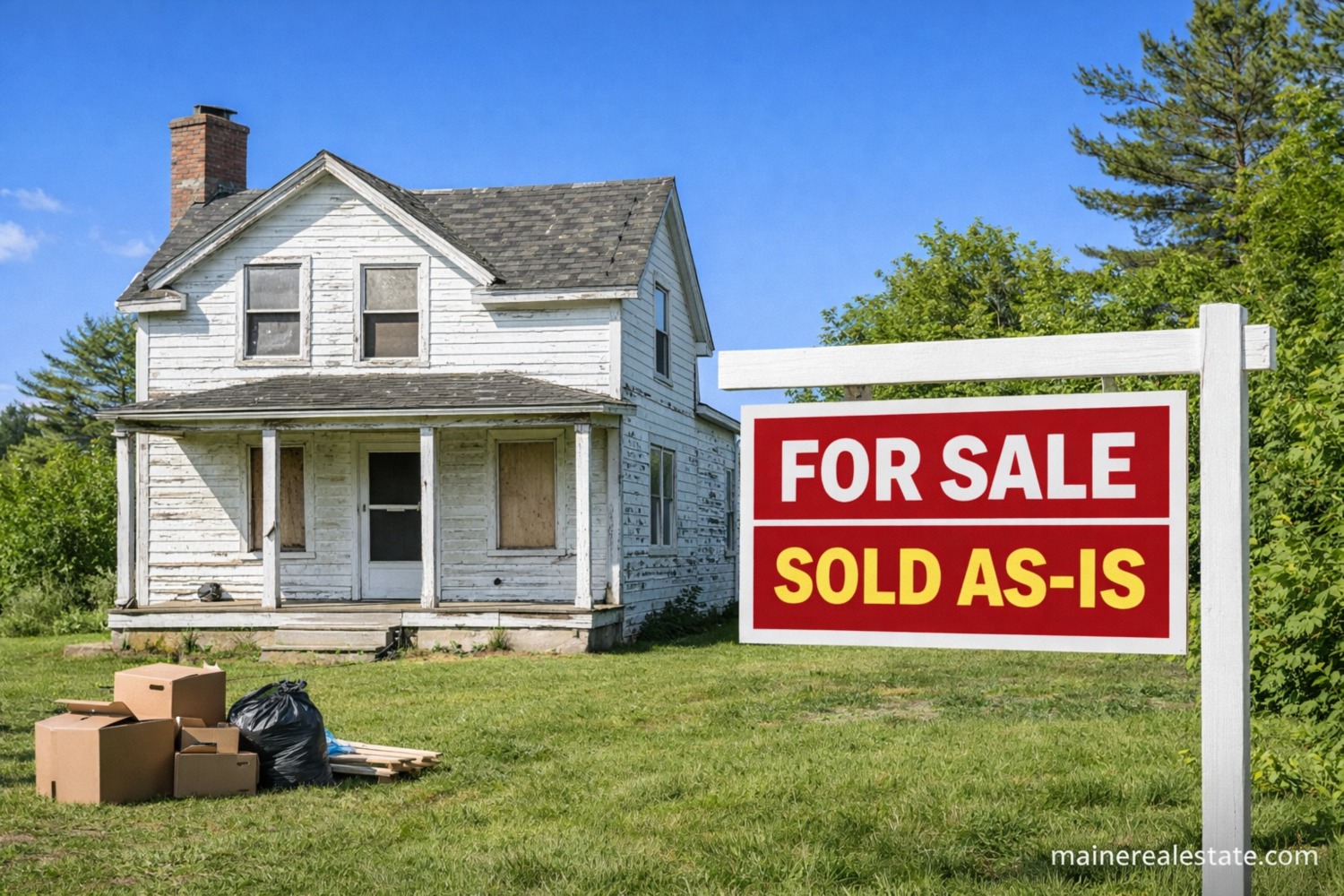
Selling your Maine home as-is might seem like the quickest path to closing, especially when facing significant repair costs or a tight timeline. But the process comes with important legal requirements, strategic considerations, and misconceptions that could cost you thousands if you’re not careful. Whether you’re dealing with an aging septic system, a buried oil tank, deferred maintenance, or simply want to avoid the hassle of repairs, understanding what “as-is” truly means in Maine (and how to position your property for success) is essential.
The reality is more nuanced than most sellers realize. Selling as-is doesn’t mean you can hide problems. It doesn’t mean you avoid responsibility. And it doesn’t automatically mean accepting a lowball offer from a cash buyer. This guide walks you through the legal framework, the market dynamics, and the strategic decisions that determine whether selling as-is is right for you and how to get the best possible outcome.
What “As-Is” Actually Means in Maine
In Maine real estate, an “as-is” sale means the buyer accepts the property in its current condition, and the seller makes no repairs or improvements before closing. Sounds straightforward, right? The devil, however, lives in the details.
From a legal standpoint, “as-is” is primarily a contractual arrangement. It signals that the buyer has inspected or chosen not to inspect the property and is taking it exactly as it stands. This protects sellers from being forced to make repairs that a buyer might otherwise demand. But (and this is critical) “as-is” does not override Maine’s mandatory disclosure laws.
Selling as-is does not mean you can hide problems. Maine Title 33 §173 requires a complete Property Disclosure Statement, and misrepresenting property condition is illegal even in cash sales.
Maine law requires all residential property sellers to provide buyers with a detailed Property Disclosure Statement before or at the time of contract signing (Maine Title 33 §173). This disclosure covers the property’s condition, systems, repairs, known defects, and history. You must answer truthfully and completely. Lying on the disclosure statement (even on an as-is sale) exposes you to liability, potential lawsuits, and remediation costs. Some sellers mistakenly believe that selling as-is gives them permission to omit or minimize known problems. It doesn’t. The disclosure obligation is separate from and independent of the as-is arrangement.
Buyers also retain their inspection rights in as-is transactions. In most Maine sales, there’s a 10-day inspection contingency period that allows the buyer to hire a professional home inspector and identify issues. Even in an as-is sale, buyers can request and obtain their own inspections. The difference is that they cannot demand you make repairs; they can only walk away if they find serious problems and choose to cancel the contract during the inspection period.
The Maine Cash Buyer Market and As-Is Sales
One reason as-is sales have become more common in Maine is the significant presence of cash buyers in the market. Approximately 32 to 33 percent of all residential home sales in Maine are cash transactions, the highest rate in New England. Cash buyers (whether individual investors, companies, or private buyers) tend to be the most frequent purchasers of as-is properties.
Cash buyers often have the capital to absorb repair costs and the expertise to evaluate properties based on long-term investment potential rather than move-in readiness. They understand that a property with a solid foundation, good bones, and fixable systems can represent excellent value. This large cash buyer segment in Maine creates a genuine market for as-is homes, which is why some properties sell successfully without repairs.
Roughly one-third of Maine home sales are cash transactions, making Maine’s market particularly receptive to as-is properties and investor buyers.
However, a crucial distinction exists between selling to a cash buyer through an agent versus selling directly to a cash-buying company. Cash-buying companies often make low offers (typically 60 to 80 percent of after-repair value) because they’re accounting for their own overhead, holding costs, and profit margins. Listing your as-is property on the open market with an agent, on the other hand, can attract motivated cash buyers willing to pay significantly more than a corporate offer. The difference can easily be $50,000 to $150,000 or more on a Maine property.
Common Reasons to Sell As-Is in Maine
Properties end up being marketed as-is for several reasons, nearly all tied to the economics of repair versus sale price. Understanding your situation helps determine whether selling as-is is truly the best path forward.
Aging septic systems represent one of the most common reasons Maine homeowners sell as-is. Septic repairs and replacements are expensive (anywhere from $35,000 to $95,000 depending on system design, soil conditions, and the size of the property). For many homeowners facing a system that’s failing or approaching the end of its useful life, making such a substantial repair before selling doesn’t make financial sense, especially if the property’s current market value wouldn’t support the full cost of replacement.
Buried oil tanks create similar financial pressures. Maine has thousands of properties with legacy oil storage tanks in the ground. If a tank is leaking or suspected of leaking, removal and remediation can cost anywhere from $25,000 to $85,000 or more, depending on soil contamination levels. Environmental liability and cleanup costs make these properties candidates for as-is sales, particularly to buyers (often investors) who have experience managing environmental issues or can absorb the cost into a renovation budget.
Outdated heating systems, deferred maintenance, structural concerns, and general age-related wear on properties with solid bones but cosmetic or system-level issues often justify as-is marketing. Estate properties (homes inherited by beneficiaries who may live far away or lack the resources or desire to invest in repairs) also frequently enter the market as-is. These situations aren’t about hidden problems or dishonesty; they’re about aligning the sale strategy with the financial and logistical realities of the seller.
Pricing an As-Is Property: Strategy Matters
One of the most significant mistakes sellers make when considering as-is sales is undervaluing their property by accepting the first cash buyer offer without exploring the broader market. As mentioned, institutional cash buyers typically offer 60 to 80 percent of a property’s after-repair value (ARV). If a house would sell for $350,000 after renovations, a cash buyer might offer $210,000 to $280,000. That gap can represent substantial lost equity.
Strategic pricing on the open market, by contrast, can capture a much larger share of value. When an as-is property is priced realistically, marketed honestly, and presented to the full buyer pool (rather than just corporate cash buyers), it often attracts individual investors, contractors, and cash buyers who recognize the opportunity and are willing to pay closer to fair market value. The difference between a $210,000 cash buyer offer and a $300,000 offer from a motivated buyer found through an MLS listing can be transformative.
Pricing an as-is property requires careful analysis. Your agent should order a pre-inspection, compare recent comparable sales of as-is properties in your area, and determine what informed buyers would pay given the property’s condition and the cost of necessary repairs. This might mean listing at 70 to 85 percent of fully renovated value, depending on the specific issues and the local market. Getting this calculation right is essential; too high, and you’ll scare off legitimate buyers; too low, and you leave money on the table.
As-Is Versus Making Repairs: The Financial Decision
Deciding whether to sell as-is or make repairs is fundamentally a financial and timeline question. There’s no universal right answer; the best choice depends on your specific situation, the property, and current market conditions.
Making repairs before sale makes sense if the cost of repairs is modest relative to the price increase they’ll generate. For example, if new exterior paint costs $8,000 and increases your home’s value by $20,000, the investment pays dividends. Similarly, replacing an aging but functional roof might cost $15,000 but prevent buyer concerns that could derail a sale or depress price significantly.
Selling as-is becomes more attractive when repair costs are substantial relative to potential value gain. If a new septic system costs $60,000 and would only increase your home’s value by $40,000 (because the repaired value is still capped by comparable sales in the area), you’re better off selling as-is and pricing accordingly. The buyer who needs the septic system repaired will factor that cost into their offer; you don’t get to recoup the full cost of the repair regardless of whether you do it before or after sale.
Timeline is another critical factor. If you need to sell quickly, as-is sales often move faster. Buyers looking at properties in as-is condition are frequently prepared to make quick decisions and close quickly. Conversely, if you have time, making repairs and selling move-in ready might attract a broader buyer pool and potentially higher offers. However, factor in the carrying costs of holding the property while repairs are completed; if it will take three months to renovate and you’re carrying a mortgage, property taxes, and utilities, the carrying costs might exceed the benefit of a higher sale price.
Market conditions also matter. In a strong seller’s market with low inventory, buyers are more willing to overlook issues and take on repairs themselves. In a slower market, selling with deferred maintenance becomes harder, and as-is pricing must be more aggressive. An experienced local agent can help you read current conditions and make the right call.
Marketing an As-Is Property Effectively
Selling as-is doesn’t mean giving up on marketing excellence. In fact, strategic marketing becomes even more important when a property has known condition issues. The goal is to present the property honestly while highlighting its genuine strengths and positioning it to attract the right buyers (those who understand the upside potential and have the resources to handle the work).
Transparency is paramount. Your listing should clearly state that the property is being sold as-is. Many buyers specifically search for as-is properties because they’re investors or contractors; being upfront attracts qualified, motivated buyers and filters out those who will be shocked or disappointed by condition issues. Deceptive or evasive listings waste everyone’s time and create liability.
Professional photography that shows the property in its actual condition is essential. This means good lighting, clear images, and honest representation. Don’t try to hide damage; instead, use photography to emphasize the positives. Frame shots to highlight the home’s bones, architectural details, the lot, views, location advantages, and any strong systems or recent improvements. If the roof is old but structurally sound, a photo of the dramatic backyard or mature trees might be more compelling than a shot of worn roofing.
Many successful as-is listings include pre-inspection reports. By ordering a professional home inspection and sharing the report with potential buyers, you reduce uncertainty and position yourself as a transparent, confident seller. Buyers appreciate having data rather than having to speculate about what issues might exist. A pre-inspection often prevents offers from falling through due to inspection surprises and can actually support higher offers by proving that major structural or foundation issues don’t exist.
Marketing copy should be honest but strategically framed. Rather than listing every defect, emphasize opportunity, location, and potential. Describe the house as having solid bones and excellent bones, set on a beautiful lot, or presenting strong opportunities for contractors and investors. Target your marketing to investor groups, real estate investment communities, and contractor networks, not just general homebuyers. Consider social media ads targeted to real estate investors in Maine and New England.
Considering Selling As-Is?
A realistic market assessment is the first step. Understanding what your property could be worth under different scenarios helps you make an informed decision. Get a Free Home Valuation | Talk to an Agent.
The Closing Process for As-Is Sales
From a legal and procedural perspective, closing an as-is sale in Maine follows the same general process as any other residential real estate transaction. Your attorney and the buyer’s attorney will review the purchase and sale agreement, conduct title work, ensure the Property Disclosure Statement has been properly completed and signed, handle escrow arrangements, and schedule closing.
One important detail: the as-is clause in the purchase agreement should be clear and specific. It should state that the buyer is accepting the property in its current physical condition, that no repairs will be made by the seller, and that the buyer waives the right to demand repairs based on inspection findings (though they retain the right to terminate during the inspection period). Your attorney can ensure the language is appropriately protective and complies with Maine law.
The title company will conduct its usual title search and issue a title insurance commitment. The as-is nature of the sale doesn’t affect title work. Your lender (if you have one) may require certain certifications, such as verification that no environmental liens exist (particularly important if the property has or had an oil tank). These are standard precautions and shouldn’t complicate closing.
Timing in an as-is sale is often faster than in a transaction requiring repairs. Buyers understand they’re taking the property as-is, so there’s less back-and-forth negotiation over what will and won’t be fixed. Closing can sometimes occur within 30 to 45 days of contract, depending on the buyer’s financing and your respective circumstances.
Working with an Agent on an As-Is Sale
While some sellers assume as-is sales don’t require professional representation, an experienced local agent can significantly impact your bottom line. The right agent brings three essential elements to an as-is transaction: accurate pricing based on comparable as-is sales in your area, targeted marketing to reach qualified buyers (investors, contractors, and cash buyers who understand value-add properties), and guidance through Maine’s disclosure requirements and closing process.
A good agent will start with a pre-listing analysis that includes estimating repair costs for known issues, researching recent comparable sales of as-is properties in your market, and running financial scenarios showing what you’d likely net from an as-is sale versus making repairs first. This data-driven approach helps you make an informed decision rather than guessing.
When evaluating agents for an as-is listing, look for someone with specific experience in distressed or as-is sales, connections to local investor and contractor networks, and a track record of transparent marketing. Ask how they would price and position your specific property. A knowledgeable agent should be able to explain their pricing strategy with comparable data, not just an estimate based on general market conditions. For more on what Maine sellers need to know about the process, explore our guide to Maine home seller disclosure requirements.
Key Takeaways
Selling your Maine home as-is can be a smart strategy when approached correctly. Remember that as-is sales don’t mean you can hide problems; Maine law still requires full disclosure and honesty. Buyers retain inspection rights, though they can’t demand repairs. The Maine market’s large cash buyer segment (about one-third of all sales) creates genuine demand for as-is properties, but listing with an agent typically generates better prices than selling directly to a cash buyer company.
The decision to sell as-is should be based on a clear financial and timeline analysis. Common triggers include expensive septic repairs, buried oil tank remediation, outdated systems, and deferred maintenance where repair costs exceed their value-add. Strategic pricing, transparent marketing, and targeting the right buyer audience are essential. And throughout the process, working with an experienced Maine real estate professional ensures you comply with legal requirements, position the property effectively, and maximize your proceeds.
Planning Your Next Steps?
Learn what you need to know about how much it costs to sell a house in Maine, or check out our broader step-by-step guide to selling your Maine home.
Frequently Asked Questions
Do I have to disclose known problems if I’m selling as-is?
Yes, absolutely. Maine’s Property Disclosure Statement (Title 33 §173) is mandatory regardless of whether you’re selling as-is, and you must answer all questions truthfully and completely. Failing to disclose known defects is illegal and can expose you to liability even in as-is transactions. The as-is clause addresses repairs and buyer expectations about condition; it does not override disclosure obligations.
Can a buyer still get an inspection on an as-is property?
Yes. Most Maine purchase agreements include a 10-day inspection contingency, even for as-is sales. The buyer can hire a home inspector and uncover any issues. The difference is that they can’t demand you make repairs; they can only walk away if they choose. This is why transparent pre-listing inspections often help (they give buyers data and confidence rather than forcing them to speculate).
How much less should I price an as-is property?
There’s no fixed percentage; it depends on the specific issues, repair costs, comparable sales, and market conditions. Generally, realistic as-is pricing ranges from 70 to 85 percent of the estimated after-repair value. Work with an agent who will analyze your property’s condition, research comps, and set a price that’s attractive to qualified buyers while capturing fair value for your equity.
Is it better to sell to a cash buyer company or list with an agent as-is?
In most cases, listing with an agent yields significantly better results. Cash buyer companies typically offer 60 to 80 percent of after-repair value because they account for overhead and profit. Listing on the open market attracts individual investors and cash buyers willing to pay closer to market value (often $50,000 to $150,000+ more than a corporate offer). The investment in professional listing usually pays dividends.
How long does it typically take to close an as-is sale?
As-is sales often close faster than standard sales because there’s less negotiation over repairs and timelines are simpler. Many as-is transactions close within 30 to 45 days of contract, depending on the buyer’s financing and financing timeline. Cash buyers typically close even faster, sometimes within 21 to 30 days.
What’s the difference between “as-is” and selling with a home warranty?
An as-is sale means the buyer accepts the property’s condition and the seller makes no repairs. A home warranty is an optional service contract that covers certain system repairs or replacements after closing, but it doesn’t change the as-is nature of the sale. Some sellers offer a home warranty on an as-is property as a goodwill gesture or competitive advantage, but it’s not a substitute for disclosure or pre-inspection.
Do I need environmental testing before selling an as-is property with potential contamination?
Maine law requires disclosure of known or suspected environmental issues, including buried oil tanks or soil contamination. While you’re not required to conduct environmental testing before sale, many as-is sellers get Phase I environmental assessments to support transparent marketing and prevent deals from falling apart. Phase I assessments (documents, site history, visual inspection) typically cost $500 to $2,000 and provide valuable information for informed buyers and lenders. For details on all disclosure requirements, see our complete disclosure guide.
Can I still negotiate with buyers if I’m selling as-is?
Yes, negotiation is still possible, but it’s limited in scope. In an as-is sale, you won’t negotiate repairs, but you can negotiate price, closing timeline, or contingencies. Some as-is buyers may request concessions (like a price reduction for a major system failure discovered during inspection) rather than asking you to make repairs. The key is being clear upfront about what “as-is” means in your specific deal so both parties understand expectations. For a comprehensive overview of the entire Maine selling process, check out our step-by-step guide to selling in Maine.
Ready to Explore Your Options?
Whether you’re leaning toward selling as-is or wondering if targeted repairs might be worthwhile, the right next step is understanding your property’s current market position. An experienced local agent can walk you through the numbers and help you choose the strategy that makes the most financial sense for your situation.