
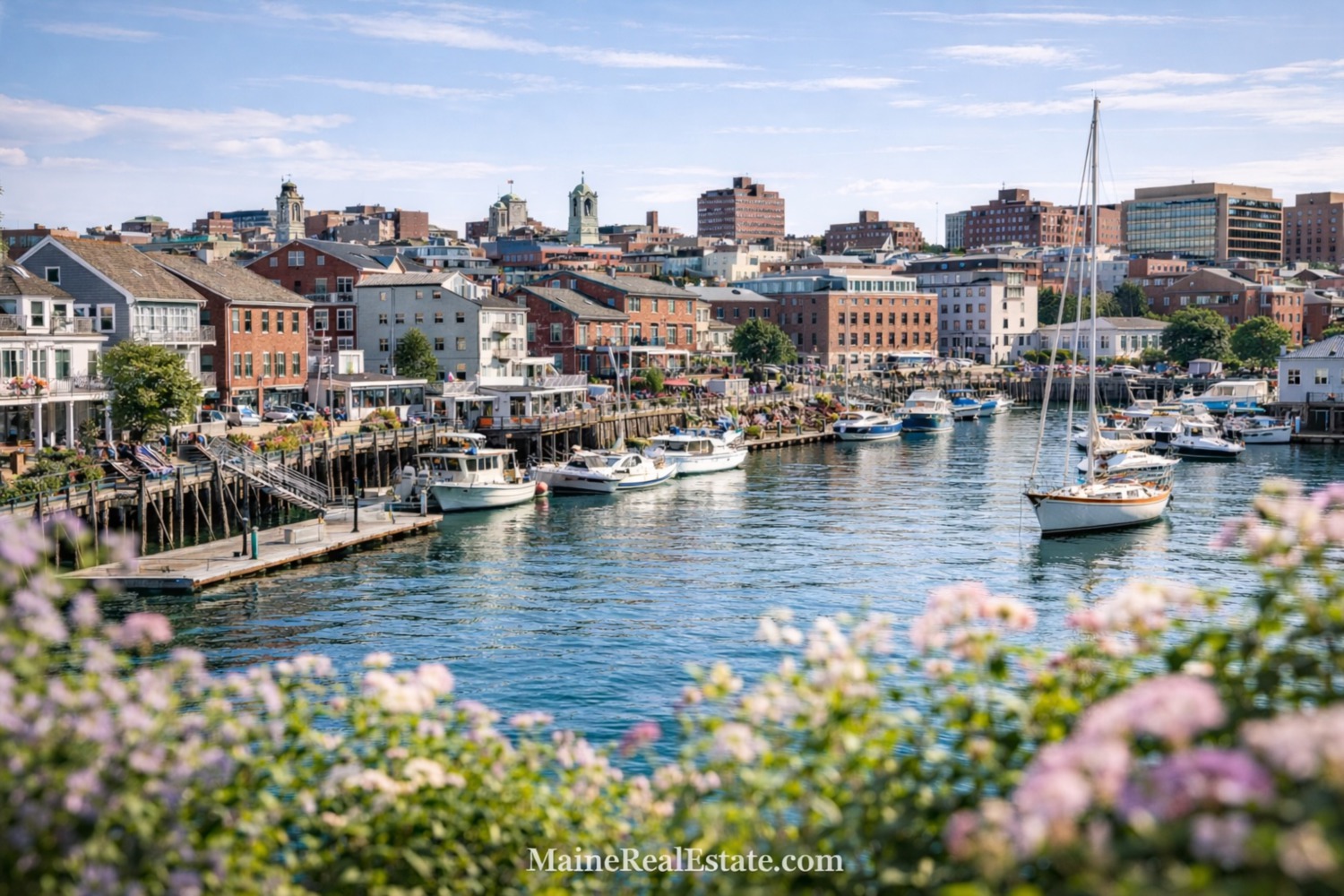
Portland is Maine’s largest city—a waterfront community with deep roots, booming culture, and a real estate market that reflects its desirability. Whether you’re a first-time buyer, a family growing into new space, an empty nester, or a professional seeking an urban lifestyle, Portland offers neighborhoods and homes for nearly every taste and budget.
This guide covers Portland’s main residential areas, neighborhood character, schools, recreation, and real estate trends to help you decide if Portland is right for you. We’ll also share why our community page is a great resource for local market data.
Portland’s Neighborhoods
Portland’s residential areas each have distinct character. Let’s walk through the main ones:
Downtown Portland
Downtown is experiencing a renaissance. Historic brick buildings are being converted to modern apartments and condos. The neighborhood features walkable streets, restaurants, galleries, and waterfront parks. Homes range from historic conversions to new construction condos, with price points reflecting the central location and urban amenities.
Downtown Living: The Heart of the City
Downtown Portland offers unmatched walkability and cultural access. You’ll find art galleries, independent bookstores, coffee shops, and public green spaces within walking distance. Real estate here includes renovated lofts, modern condos, and some historic single-family homes. Commute times are minimal—most residents can reach work, dining, and entertainment on foot or by bike.
Learn more about Portland visitor resources and cultural attractions.
The East End: Classic Portland Character
The East End is known for tree-lined streets, Victorian homes, and established neighborhoods. Properties here offer square footage and character; many homes feature original hardwood floors, crown molding, and well-maintained yards. The neighborhood draws buyers seeking period architecture, proximity to the waterfront, and established community roots. Schools here are well-regarded, and the neighborhood has strong walkability for shopping and dining along Congress Street.
The West End: Growth and Revitalization
The West End is experiencing renewed investment and development. The area features a mix of historic homes and newer construction, with ongoing improvements to parks and local gathering spaces. Properties offer better square footage per dollar compared to downtown or the East End, attracting new homebuyers and downsizers alike. The neighborhood is conveniently located for commuting while offering quieter residential streets.
Bayside & Beyond: Suburban Character
North of downtown, Bayside and surrounding neighborhoods offer single-family homes with more land, modern amenities, and good schools. These areas provide suburban living while remaining close to Portland’s urban center. Yards and green space are larger here, and the neighborhood feel is distinctly residential. It’s a popular choice for buyers wanting the Portland address with more space and a quieter setting.
Schools and Recreation
Portland’s public school system serves the community from elementary through high school. The City of Portland website provides school information, enrollment data, and educational resources.
Recreation options are abundant: Deering Oaks Park offers paths, playgrounds, and seasonal activities. Bayside Trail connects to the Eastern Promenade for waterfront walks. The YMCA, community centers, and local sports leagues provide year-round activities for all ages and interests.
Dining, Arts & Culture
Portland punches well above its weight for food and culture. Congress Street alone hosts dozens of restaurants ranging from fine dining to casual neighborhood spots. The arts scene includes galleries, theaters, and music venues. Read more in our guide to Portland’s Restaurant, Arts & Culture Scene.
The Old Port district stays active year-round with festivals, markets, and waterfront events.
Getting Around Portland
Most neighborhoods are walkable or bikeable. METRO bus system provides public transit. Parking downtown can be challenging, so many residents don’t maintain cars—a factor that appeals to both budgets and environmental values. I-295 provides quick access to suburbs and other Maine communities if needed.
Portland Housing Market
Portland’s median home price reflects its position as Maine’s largest city and cultural hub. Prices vary widely by neighborhood: downtown and East End command premiums, while West End and Bayside offer better value. Condo inventory is strong downtown; single-family homes dominate other neighborhoods.
Ready to explore Portland’s real estate market in detail? Check out our guide on Buying a Condo in Portland or South Portland, and visit our Portland community page for current market data.
Frequently Asked Questions
What is the median home price in Portland?
Portland’s median home price varies by neighborhood and property type. Downtown and East End condos command higher prices; West End and Bayside single-family homes may offer better value. Our community page provides current market data and trends.
Is Portland walkable?
Downtown, the East End, and Bayside are highly walkable for shopping, dining, and recreation. Most Portland neighborhoods have sidewalks and reasonable distances to local services. However, some outlying areas benefit from a car for broader access.
Which Portland neighborhoods are most popular?
Downtown, the East End, and Bayside are consistently sought after for their walkability, character, and schools. West End is growing in popularity as prices increase elsewhere. Each offers distinct benefits—choose based on your lifestyle preferences and real estate budget.
What are Portland’s public schools like?
Portland Public Schools serve K-12 students. The City of Portland website provides detailed enrollment, curriculum, and program information for families evaluating schools.
Can I walk to restaurants and shops from Portland neighborhoods?
Downtown, East End, and Bayside have excellent walkable shopping and dining. Congress Street offers dozens of restaurants, cafes, and shops. The Old Port is pedestrian-friendly. Outlying areas may require short drives for some amenities.
Ready to explore Portland real estate? The Maine Real Estate Team is here to answer questions about Portland neighborhoods, market conditions, and finding your ideal home. Contact us today.
Written by The Maine Real Estate Team — your local Maine real estate experts.