
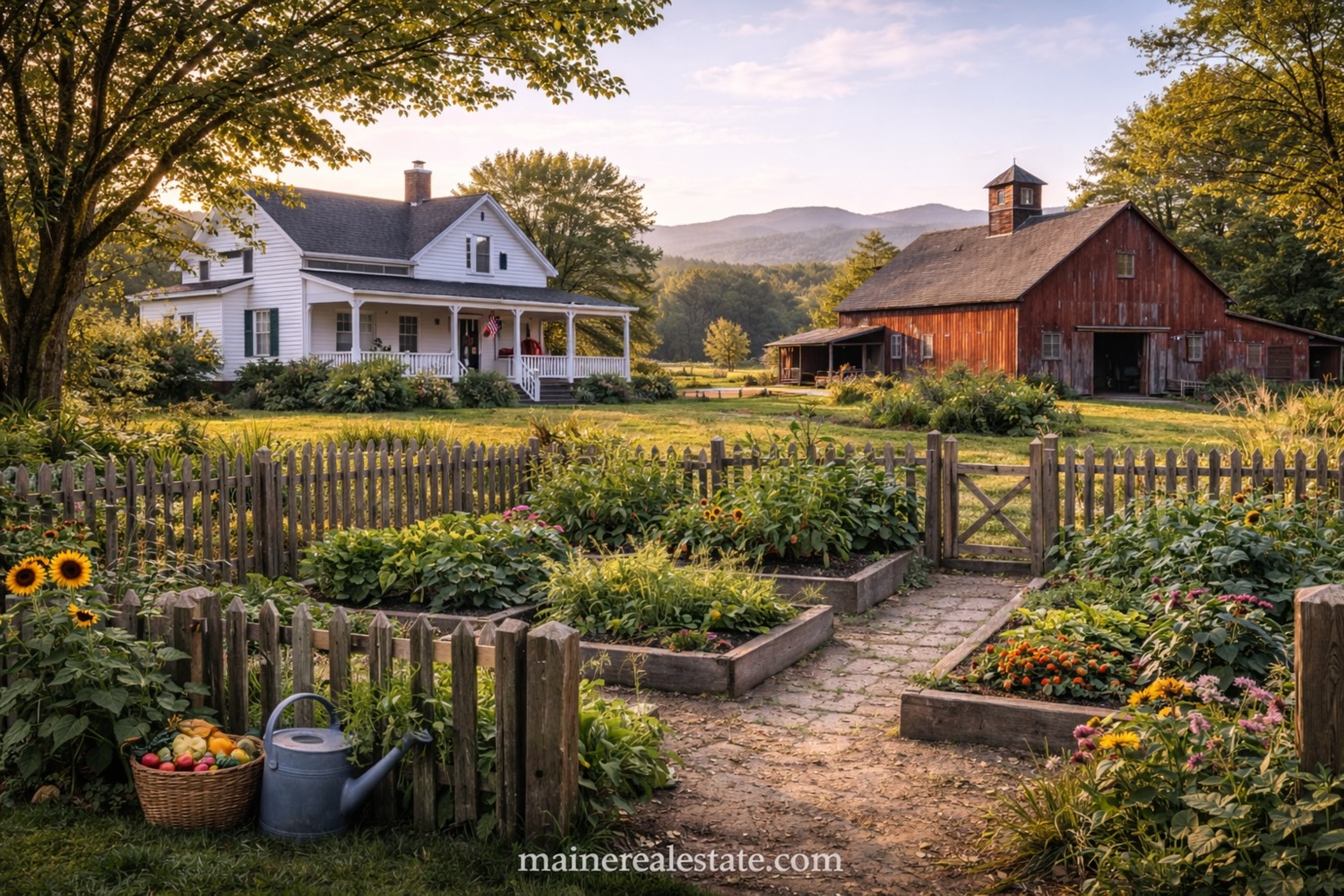
If you’ve ever dreamed of owning a Maine farmstead or homestead property, you’re not alone. There’s something deeply appealing about the idea of rural Maine living, waking up on your own land, growing your own food, and building a more self-sufficient lifestyle. The good news? Maine’s agricultural landscape is experiencing a revival, and opportunities to purchase farmland in Maine have never been more accessible for those seeking this lifestyle.
Whether you’re interested in a working farm, a small hobby farm, or a homestead with acreage and outbuildings, Maine offers diverse agricultural properties that can make your rural Maine living dream a reality. This comprehensive guide will walk you through everything you need to know about Maine farm properties, from what to look for to where to find the best deals.
Understanding Maine’s Agricultural Heritage and Modern Revival
Maine’s farming history runs deep. For over two centuries, agriculture has been woven into the fabric of Maine’s identity. The state was once known as “The Potato State,” with Aroostook County producing millions of pounds of potatoes annually. While the agricultural landscape has evolved, Maine’s farming heritage remains strong, and we’re witnessing a genuine revival in agricultural interest.
Today’s Maine farmstead properties attract a diverse range of buyers. Some are experienced farmers looking to relocate to Maine’s supportive agricultural community. Others are newcomers drawn by the appeal of homesteading, and many discover that the reality is even more rewarding than they imagined. What’s driving this revival?
The Modern Maine Agricultural Movement includes several key factors:
- Growing interest in local food systems and farm-to-table economics
- Rising demand for organically-grown and locally-sourced products
- Increased awareness of sustainable farming practices
- A desire for more meaningful work connected to the land
- Remote work opportunities that allow people to relocate to rural areas
- Interest in food security and self-sufficiency
Maine’s relatively affordable farmland compared to other northeastern states, combined with supportive agricultural networks and programs, makes the state an increasingly attractive destination for those seeking rural Maine living.
Types of Maine Farm Properties: Finding Your Perfect Fit
Not all Maine farmstead properties are created equal. Understanding the different types of agricultural properties available will help you identify what matches your goals and lifestyle.
Working Farms
A working farm is an actively producing agricultural operation. These Maine farm properties typically have:
- Established crop production (vegetables, grains, berries, apples, etc.)
- Existing customer bases or wholesale relationships
- Professional-grade infrastructure and equipment
- Developed soil management practices
- Established water systems and irrigation
If you’re an experienced farmer or have significant agricultural experience, a working Maine farm for sale might offer immediate income potential. However, these properties typically command premium prices and require substantial operational knowledge.
Hobby Farms
Hobby farms represent a middle ground, offering more than a backyard garden but not a commercial operation. These Maine farmstead properties typically include:
- 5 to 30 acres of mixed-use land
- Smaller-scale crop or livestock operations
- Residential home suitable for full-time living
- Modest outbuildings and basic infrastructure
- Potential for supplemental income
Hobby farms appeal to those seeking rural Maine living with some agricultural production without the demands of a full commercial operation. Many hobby farm owners sell at local farmers markets, offer agritourism experiences, or maintain small-scale livestock operations.
Homesteads with Agricultural Potential
A homestead differs from a farm in that it emphasizes self-sufficiency and personal use rather than commercial production. These Maine homestead properties feature:
- Residential home on 1 to 50+ acres
- Basic agricultural infrastructure (well, septic, potentially barns)
- Suitable land for vegetable gardens, small orchards, or small animal keeping
- Forest areas that may include timber value
- Potential for adding agricultural features
Homesteads appeal to those who want the rural Maine living experience and the ability to grow or raise some of their own food without commercial agricultural goals. This is often the most accessible entry point into Maine farmstead ownership.
Woodlots with Homes
Maine’s forest resources make properties combining timber value with residential living increasingly popular. These Maine farm properties include:
- 10 to 100+ acres of forested land
- Timber or pulpwood value for potential income
- Primary residence on the property
- Potential for maple sugaring, Christmas tree production, or other forest-based activities
- Access to Maine’s woodland tax programs
Woodlot properties appeal to those interested in sustainable forestry, long-term land stewardship, and diversified rural Maine living income.
The Best Regions for Maine Farmstead Properties
Maine’s geography creates distinct agricultural zones, each with different characteristics, advantages, and price points.
Aroostook County: Maine’s Agricultural Heartland
Aroostook County remains Maine’s premier agricultural region. Known historically for potato production, Aroostook farmland is experiencing renewed interest from various agricultural operations.
Advantages:
- Largest concentration of established farmland
- Best soil conditions for row crop production
- Most developed agricultural infrastructure and services
- Lower farmland prices compared to southern Maine
- Strong agricultural community and support networks
Challenges:
- Colder growing season limits some crop varieties
- Distance from major population centers affects direct-to-consumer sales
- Smaller local labor force in peak seasons
- Longer, more severe winters
Best suited for: Experienced farmers, grain and root crop producers, large-scale operations
Midcoast Maine: Balanced Agriculture and Lifestyle
The Midcoast region, including areas around Camden, Rockport, Damariscotta, and the surrounding towns, offers compelling advantages for Maine homestead property seekers.
Advantages:
- Proximity to farmers markets, restaurants, and direct consumers
- Strong farm-to-table culture and local food economy
- Moderate growing season with diverse crop potential
- Vibrant community of farmers and agricultural businesses
- Tourism-related agritourism opportunities
- Better job market and economic opportunities
Challenges:
- Highest farmland and property prices in Maine
- Smaller average farm sizes
- Less available acreage relative to demand
Best suited for: Farm-to-table producers, agritourism operators, those valuing community engagement, hobby farmers seeking local markets
Western Foothills and Mountains
Maine’s western regions, including areas around Bethel, Fryeburg, and the Oxford Hills, offer mountain charm with agricultural potential.
Advantages:
- Scenic properties with mountain views
- Mixed farming (vegetables, herbs, specialty crops) potential
- Growing agritourism market (farm stays, workshops)
- Reasonable farmland pricing relative to amenities
- Access to White Mountain recreation economy
Challenges:
- Shorter, more unpredictable growing season
- Steeper terrain limits mechanized farming
- Smaller markets for direct sales
- Winter severity and accessibility challenges
Best suited for: Specialty and niche crop growers, agritourism operators, those valuing scenery and rural charm
Kennebec Valley
The Kennebec Valley, stretching from Augusta through smaller towns, offers an underrated option for Maine farm properties.
Advantages:
- Moderate price points between southern and northern Maine
- Reasonable proximity to significant population centers
- Developing local food networks
- Mix of active farmland and available property
- Good infrastructure and services
Challenges:
- Less established agricultural community than Aroostook
- Fewer agritourism and farm-to-table connections
- Some areas experiencing exurban development pressure
Best suited for: Those seeking value, small-to-medium operations, those wanting to build community from scratch
Soil Quality and Growing Seasons: Region-by-Region Reality
Romantic visions of Maine farmstead properties sometimes collide with agricultural reality. Understanding soil quality and growing seasons in your target region is essential.
Maine’s Growing Season
Maine’s growing season varies significantly by region:
- Aroostook County: 90 to 100 frost-free days
- Midcoast Maine: 120 to 140 frost-free days
- Western Maine: 100 to 120 frost-free days
- Southern Maine (York County): 140 to 160 frost-free days
This matters tremendously. Cool-season crops like lettuce, broccoli, and potatoes thrive statewide. Heat-loving crops like tomatoes, peppers, and melons require southern Maine or intensive season extension techniques elsewhere. When considering relocating to Maine, understanding your target region’s growing season helps determine what agricultural enterprises are viable.
Soil Types and Productivity
Maine’s glacial history created diverse soil conditions:
- Aroostook County: Some of Maine’s most productive soil for potato and grain production; well-developed agricultural soils
- Midcoast Maine: Variable soils requiring amendment; rocky terrain in many areas; productive gardens possible with preparation
- Western Maine: Often shallower, rockier soils; excellent for pasture; vegetables require bed development
- Kennebec Valley: Mix of productive agricultural soil and less developed land; varies significantly by specific location
Before purchasing a Maine farm for sale, request soil testing (NRCS soil survey) and, ideally, speak with existing farmers in the area about what grows well. This practical knowledge is invaluable.
What to Look For in a Maine Farmstead Property
Beyond romantic notions of rural Maine living, successful Maine farmstead ownership requires attention to specific practical factors.
Water Sources and Access
Water is essential for any agricultural operation and for household use:
- Well water: Ensure existing wells are tested for capacity, quality, and safety. Agricultural operations may need higher volumes than household wells provide.
- Surface water: Ponds, streams, or springs can supplement well water for livestock or irrigation
- Septic considerations: Ensure adequate separation between water sources and septic systems
- Spring/drought patterns: Understand seasonal water availability in your specific location
Never assume water access. Always have professional assessments completed before purchase.
Outbuildings and Infrastructure
Quality outbuildings significantly impact rural Maine living success:
- Barns: Assess structural integrity, roof condition, and functionality for your intended use (equipment storage, animal housing, hay storage)
- Equipment storage: Adequate dry storage protects valuable farm equipment
- Milking parlor or animal facilities: If livestock is planned, evaluate existing facilities
- Tool sheds and workspaces: Proper storage and workspace improve operational efficiency
- Fencing condition: Quality fencing is expensive to install; assess existing fencing thoroughly
Property condition reports should include detailed outbuilding evaluations. Many novice buyers underestimate repair costs for aging agricultural structures.
Fencing and Pasture Quality
If livestock is part of your Maine homestead plans:
- Evaluate existing fencing type and condition
- Assess pasture quality and productivity
- Understand pasture history and soil health
- Plan for rotational grazing infrastructure if desired
- Budget for necessary fencing improvements
Poor pasture condition is expensive to rehabilitate. Quality pasture is more valuable than acreage alone.
Tillable vs. Non-Tillable Land
Understanding your land’s actual agricultural potential is crucial:
- Tillable acres: Can be cultivated for crops; assess slope, stoniness, soil type
- Pasture/hay land: Suitable for livestock forage production
- Woodland: May offer timber value or wildlife habitat; assess if relevant to your goals
- Buildable areas: Understand zoning for potential future structures or income diversification
A 50-acre property might include only 10 acres of truly productive farmland. Know what you’re actually getting.
Roads and Access
Practical considerations often overlooked:
- Driveway condition: Can it handle farm equipment, delivery trucks, and winter weather?
- Property access: Is it accessible year-round, or does heavy snow create seasonal limitations?
- Distance from markets: How far to farmers markets, farm stands, or agricultural service providers?
- Neighbor considerations: Are nearby properties residential or agricultural? Can equipment noise be an issue?
Rural Maine living means longer distances to services. Access and road conditions significantly impact daily life and business operations.
Maine Farmland Pricing: What to Expect
Maine farmland prices vary dramatically based on location, size, and features.
Price Ranges by Region
- Aroostook County: $1,000 to $3,000 per acre for agricultural land; less for forest
- Midcoast Maine: $3,000 to $8,000+ per acre; premium for developed properties with homes
- Western Maine: $1,500 to $4,000 per acre depending on location and improvements
- Kennebec Valley: $2,000 to $5,000 per acre
Note: These are approximate ranges. Prices fluctuate with market conditions, specific location, and property improvements. Always get professional appraisals for Maine farm properties.
What Affects Pricing
- Proximity to population centers and markets
- Existing infrastructure and improvements
- Soil quality and agricultural productivity
- Zoning and permitted uses
- Road access and driveway condition
- Building condition and livability
- Timber or other resource value
- Water rights and water source availability
Overpriced farmland is common in areas where non-farmers are competing with experienced agricultural buyers. This is particularly true in scenic areas near towns. Work with an agent experienced in agricultural real estate to assess fair market value.
Exploring Maine Farmstead Properties?
Our team can help you navigate the Maine agricultural real estate market and find properties that match your farming or homesteading goals. Whether you’re relocating from elsewhere or deepening your Maine roots, we’ll guide you through the process with expertise in both agricultural and residential properties. Connect with our team today or get a free home valuation to understand your property’s potential.
Maine’s Agricultural Tax Programs: Keeping Costs Down
Maine offers valuable tax incentives for farmstead and forestry properties, potentially saving thousands annually.
Maine Farmland Current Use Tax Assessment
Maine’s farmland current use program taxes productive agricultural land at its agricultural value rather than its market value. This means:
- Significant property tax reductions for qualifying farmland
- Properties must be in active agricultural production (minimum acreage varies)
- Tax assessment reflects agricultural productivity rather than development potential
- Substantial tax penalties if land is converted to non-agricultural use
For a 50-acre property with 30 acres in production, the tax difference between market value assessment and current use assessment can exceed $1,000 to $2,000 annually. Over time, this adds up significantly.
Maine Tree Growth Tax Law
Maine’s tree growth classification provides similar benefits for woodlots:
- Lower tax assessments for forestland managed for timber production
- Requires 10-acre minimum
- Must follow forest management plan
- Substantial penalties for early withdrawal from program
For rural Maine living that includes significant woodland, this program is essential to understand and utilize.
Federal Agricultural Programs
Federal Farm Service Agency (FSA) and USDA programs may offer additional benefits:
- Cost-sharing for conservation improvements
- Programs supporting organic or specialty agriculture
- Disaster assistance (particularly important in Maine’s weather variability)
- Technical assistance for agricultural operations
Work with your local FSA office to understand available programs.
Organic Farming in Maine: The MOFGA Advantage
Maine has a particularly strong organic farming community. If organic agriculture interests you, Maine’s organic farming network is exceptional.
MOFGA (Maine Organic Farmers and Gardeners Association)
MOFGA, founded in 1971, is one of the country’s oldest and largest organic farmer organizations.
What MOFGA offers:
- Organic certification services (MOFGA-certified organic status is highly valued)
- Educational resources and workshops
- Community support and networking
- Access to organic farming knowledge specific to Maine conditions
- Direct marketing opportunities
- Advocacy for Maine’s organic farming community
Many MOFGA-certified farmers command premium prices for their products, making organic certification economically viable even for smaller operations.
Maine’s Organic Market
Maine has a remarkable number of farmers markets, co-ops, restaurants, and consumers prioritizing organic products. This market strength makes organic Maine farm properties particularly valuable for producers.
The Farm-to-Table Economy and Local Markets
One of the most appealing aspects of Maine farmstead ownership is access to the thriving farm-to-table economy. Communities throughout Southern Maine, from Portland to Kennebunk, offer robust farmers markets and restaurant partnerships that support local producers.
Direct-to-Consumer Sales Opportunities
- Farmers markets (numerous throughout Maine, especially summer months)
- Farm stands and on-farm sales
- Community-supported agriculture (CSA) programs
- Farmers markets that operate year-round in larger communities
- Direct sales to restaurants and institutional buyers
Building Your Market
Success in farm-to-table requires more than just growing good food:
- Develop relationships with farmers market managers early
- Understand restaurant sourcing relationships and timelines
- Build a reliable customer base through CSA or regular customers
- Invest in appropriate licensing, labeling, and food safety compliance
- Plan production schedules to meet market demand
Rural Maine living can provide income through these channels, but it requires business thinking alongside agricultural expertise.
The Economics Reality
A 5-acre vegetable farm selling direct-to-consumer might generate $30,000 to $50,000 in annual sales (or more with intensive management). However, this requires:
- Significant labor investment (often 60+ hour weeks during season)
- Continuous customer acquisition and retention
- Multiple market channels to reduce risk
- Proper licensing and insurance
- Infrastructure for storage and processing
Income potential is real, but requires realistic expectations about effort and business development.
Infrastructure Needs: Planning and Budgeting
Many newcomers to rural Maine living underestimate infrastructure needs.
Essential Systems
Water systems:
- Well drilling and testing: $3,000 to $7,000
- Water storage (if needed): $1,000 to $5,000
- Irrigation infrastructure: $2,000 to $10,000+ depending on scale
Sanitation:
- Septic system replacement (if needed): $5,000 to $15,000
- Regular maintenance and pumping: $200 to $400 annually
Power:
- Backup generators: $2,000 to $10,000 (important for rural Maine living with equipment needs)
- Potential solar considerations: $10,000 to $30,000+ for significant systems
Buildings and structures:
- Barn repairs or construction: $30,000 to $100,000+ for quality structures
- Equipment storage: $5,000 to $20,000 for appropriate shelter
Hidden Infrastructure Costs
Many Maine farmstead buyers encounter unexpected expenses:
- Road/driveway maintenance and winter plowing: $1,000 to $3,000+ annually
- Equipment purchases and maintenance: Highly variable but substantial
- Pest and disease management: $500 to $2,000+ seasonally
- Soil improvements and amendments: $500 to $2,000+ annually
Budget infrastructure costs separately from property purchase price. Many farm businesses fail due to underestimated infrastructure needs rather than agricultural problems.
Zoning for Agricultural Use: Understanding Regulations
Before purchasing a Maine farm property, understand local zoning regulations.
Agricultural Zoning
- Many Maine towns have agricultural zoning that protects farmland
- Some allow diverse agricultural uses; others restrict specific activities
- Understand what uses are allowed, conditional, or prohibited
- Confirm your intended agricultural use is permitted
Conditional Use Permits
Some agricultural activities require conditional use permits:
- Livestock operations (especially larger scale)
- Agricultural tourism (farm stands, events, accommodations)
- Value-added agricultural products
- Specific livestock types
Understand permit requirements before purchasing. Some great properties are unsuitable for intended uses due to zoning restrictions.
Land Trust Conservation Easements
Many Maine farmstead properties include conservation easements, restrictions that protect agricultural use in exchange for tax benefits. Understand easement terms thoroughly:
- What uses are permitted vs. prohibited?
- Do they align with your agricultural vision?
- Can they be modified?
- Do they affect property value or financing?
While easements preserve farmland value and provide tax benefits, they create permanent restrictions worth understanding fully.
Financing Maine Farm Properties: Your Options
Purchasing a Maine farm property requires appropriate financing strategies.
Conventional Mortgage Financing
Standard mortgages work for farmsteads with residential value. However:
- Down payments may be higher (15 to 25%) for agricultural properties
- Some lenders are unfamiliar with agricultural property valuations
- Insurance may be higher for properties with operational equipment or livestock
Work with lenders experienced in agricultural real estate.
USDA Farm Service Agency (FSA) Loans
FSA loans are specifically designed for farm property purchases:
- Lower down payments (typically 10%)
- Competitive interest rates
- Longer repayment terms (up to 40 years for land purchase)
- Available to beginning farmers and those with limited credit
- Require viable farm plan
FSA loans are excellent options for serious agricultural operations. Apply through your local FSA office.
USDA Guaranteed Loan Programs
These programs guarantee loans made by private lenders:
- More flexible terms than conventional financing
- Appropriate for various farm sizes and types
- Require viable agricultural plan
Owner Financing
Some Maine farm sellers offer owner financing, which can:
- Provide flexibility for those with agricultural experience
- Require smaller down payments
- Avoid bank qualification challenges
However, owner financing often involves higher interest rates. Ensure favorable terms before committing.
Community and Support Networks: You’re Not Alone
One often-underestimated advantage of Maine farmstead ownership is the agricultural community and support available.
Agricultural Organizations and Associations
- MOFGA (Maine Organic Farmers and Gardeners Association)
- Maine Farmers Union
- Maine Agricultural Extension (University of Maine’s UMAINE Extension)
- Vegetable and Small Farm Program
- Specialty crop associations (berries, apples, herbs, etc.)
Educational Resources
University of Maine Extension offers:
- Free or low-cost workshops and webinars
- One-on-one technical assistance
- Soil testing and analysis
- Pest and disease identification
- Market development support
- Beginning farmer programs
Farmer Networking
Many Maine farmers actively mentor newcomers:
- Farmer networks and cooperatives
- Farmers markets as community gathering places
- Farm tours and educational farm visits
- Shared equipment cooperatives
- Labor-sharing arrangements during peak seasons
Rural Maine living is not isolating. Strong agricultural communities actively support newcomers willing to engage.
Realistic Expectations vs. the Romantic Vision
The gap between imagining Maine farmstead life and living it can be substantial. Approaching ownership realistically sets up success.
The Romantic Vision
The idyllic image often includes:
- Peaceful days working your own land
- Financial independence through farm income
- Deep community connections
- Freedom from corporate obligations
- Abundant homegrown food
- Simple, meaningful work
The Reality of Rural Maine Living
Actual farmstead ownership includes:
- Early mornings, late evenings, and work during bad weather
- Financial uncertainty and variable income
- Isolation during winter months
- Equipment breakdowns at inconvenient times
- Ongoing infrastructure maintenance and repair
- Physical demands that increase with age
- Significant learning curves about local conditions
- Community involvement requires intentional effort
Both the vision and reality are valid. Success comes from understanding both and building your Maine farm property plans accordingly.
The Sweet Spot: Blended Expectations
The most satisfied rural Maine living residents typically:
- Maintain some outside income (part-time work, remote work, spouse’s employment)
- View farm income as supplemental rather than total income replacement
- Embrace continuous learning and adjustment
- Accept weather and seasonal variations in stride
- Invest in community connections
- Build flexibility into their agricultural plans
- Understand that year-round farm life has seasons of intensity and relative calm
Year-Round Farm Life in Maine: Seasonal Realities
Understanding Maine’s seasons is essential to successful farmstead ownership.
Spring (April to June)
The Vision: Planting season, new growth, renewal
The Reality:
- Intense preparation work and soil readiness
- Unpredictable weather (late frosts can devastate plantings)
- Peak spring equipment failures (implements haven’t been used since fall)
- Market preparation begins for spring sales
- Longer days mean longer work hours
Summer (July to August)
The Vision: Abundance, productive growth, farmers market success
The Reality:
- Constant harvesting and market preparation
- Intense weeding and pest management
- Customer management and farm stand operations
- Peak physical work with long hours
- Vacation is largely impossible during peak season
- Heat and humidity can be challenging
Fall (September to November)
The Vision: Harvest abundance, preparing for rest
The Reality:
- Extended harvest season with compressed timelines
- Processing and preservation work
- Equipment maintenance and storage
- Final plantings and soil preparation
- Increasing weather unpredictability
- Preparation for winter (road treatment, equipment winterization)
Winter (December to March)
The Vision: Rest and planning season
The Reality:
- Maintenance work on equipment, buildings, and infrastructure
- Road conditions can isolate properties
- Heating costs are significant
- Snow removal (if you manage your own driveway)
- Limited agricultural activity (though winter farmers markets exist)
- Increased isolation and need for community connection
- Planning season actually requires substantial work
Success in year-round farm life requires appreciation for all seasons, not just the appealing ones.
Making Your Maine Farmstead Property Decision
Ownership of Maine farmstead and homestead properties is achievable and rewarding for those prepared for the realities.
Your Decision Checklist
Before purchasing a Maine farm property, honestly assess:
- Financial preparedness: Do you have adequate capital for infrastructure and startup costs, plus 1 to 2 years of operating expenses?
- Physical capability: Can you handle the physical demands of farmwork, especially if injury or illness occurs?
- Community readiness: Are you prepared to engage with local communities and farmers?
- Flexibility: Can you adjust when reality differs from plans?
- Season appreciation: Can you embrace all seasons, not just the attractive ones?
- Support system: Do you have family, friends, or professional advisors supporting your decision?
- Clear vision: Have you defined what success looks like for your Maine farmstead, financially, socially, and personally?
Next Steps
If you’re seriously considering rural Maine living:
- Spend time in your target region during different seasons
- Connect with existing Maine farmers in your intended agricultural area
- Work with an experienced agricultural real estate agent who understands both farming and the Maine market
- Consult with local professionals: surveyors, agricultural extension agents, accountants
- Visit potential properties multiple times at different times of year
- Have comprehensive inspections including soil testing, well testing, and structural assessments
- Understand financing options specific to agricultural property
- Join agricultural organizations before purchasing to build community
Frequently Asked Questions
What is the difference between a homestead and a farm in Maine?
A homestead emphasizes self-sufficiency and personal food production without commercial goals. A farm actively produces crops or livestock for sale. Maine homestead properties can become farms through intentional development, but homesteads are generally smaller and less infrastructure-intensive.
How much farmland do I need to start a hobby farm in Maine?
Hobby farms typically range from 5 to 30 acres. The size depends on your intended crops, livestock, and income goals. Many successful hobby farms operate on 10 to 15 acres. Smaller properties can support CSA operations or specialty crops, while larger properties provide room for livestock grazing and crop rotation.
What are the best crops to grow in Maine?
Cool-season crops like potatoes, lettuce, broccoli, and carrots thrive throughout Maine. Southern Maine supports heat-loving crops like tomatoes and peppers with less difficulty. Specialty crops like berries (blueberries, strawberries), apples, and herbs do well statewide. Consider your specific region’s frost-free days when planning crops. If you’re relocating from Boston or New York, southern Maine regions offer the longest growing seasons.
How do I get organic certification for a Maine farm?
Work with MOFGA (Maine Organic Farmers and Gardeners Association), which provides certification services specific to Maine. Certification requires three years of organic management before you can sell products as organic. MOFGA offers resources, workshops, and ongoing support for certified organic producers. Many Maine consumers prioritize MOFGA-certified products, making certification economically valuable.
What financing options are available for buying farmland in Maine?
Conventional mortgages, USDA Farm Service Agency (FSA) loans, and USDA Guaranteed Loan Programs all work for Maine farm properties. FSA loans offer favorable terms for agricultural operations, including longer repayment periods (up to 40 years). Some Maine sellers offer owner financing. Consult with lenders experienced in agricultural real estate to find the best option for your situation.
Can I get tax breaks on Maine farmland?
Yes. Maine’s farmland current use tax program taxes productive agricultural land at agricultural value rather than market value, potentially saving thousands annually. The Maine Tree Growth Tax Law provides similar benefits for woodlots (10-acre minimum). Federal FSA and USDA programs may offer cost-sharing for conservation improvements. Work with local professionals to maximize available tax benefits.
What should I know before moving to a Maine farmstead from out of state?
Understand Maine’s winters, local zoning regulations, and agricultural conditions before purchasing. Spend time in your target region during different seasons. Connect with existing farmers and agricultural organizations. Maine offers strong agricultural support networks, excellent MOFGA resources, and a thriving farm-to-table economy. Our comprehensive guide to relocating from Boston or New York to Maine covers important considerations for out-of-state buyers, and information about outdoor living in Southern Maine helps you understand regional lifestyle factors.
What is the current price range for Maine farmland?
Prices vary significantly by region. Aroostook County ranges from $1,000 to $3,000 per acre. Midcoast Maine ranges from $3,000 to $8,000+ per acre. Western Maine ranges from $1,500 to $4,000 per acre. Kennebec Valley ranges from $2,000 to $5,000 per acre. Prices fluctuate based on soil quality, infrastructure, location, and market conditions. Get professional appraisals for accurate valuations.
Ready to Explore Your Maine Farmstead Options?
Purchasing a Maine farm property is a significant decision that deserves expert guidance. Our team specializes in agricultural and rural properties throughout Southern Maine and beyond. We understand the unique considerations of farmstead ownership, from infrastructure needs to market opportunities. Whether you’re relocating to Maine or deepening your agricultural roots, we’re here to help you find the property that matches your vision. Contact us today to discuss your Maine farmstead goals, or get a free valuation if you’re considering a property sale. Let’s make your Maine agricultural dream a reality.