
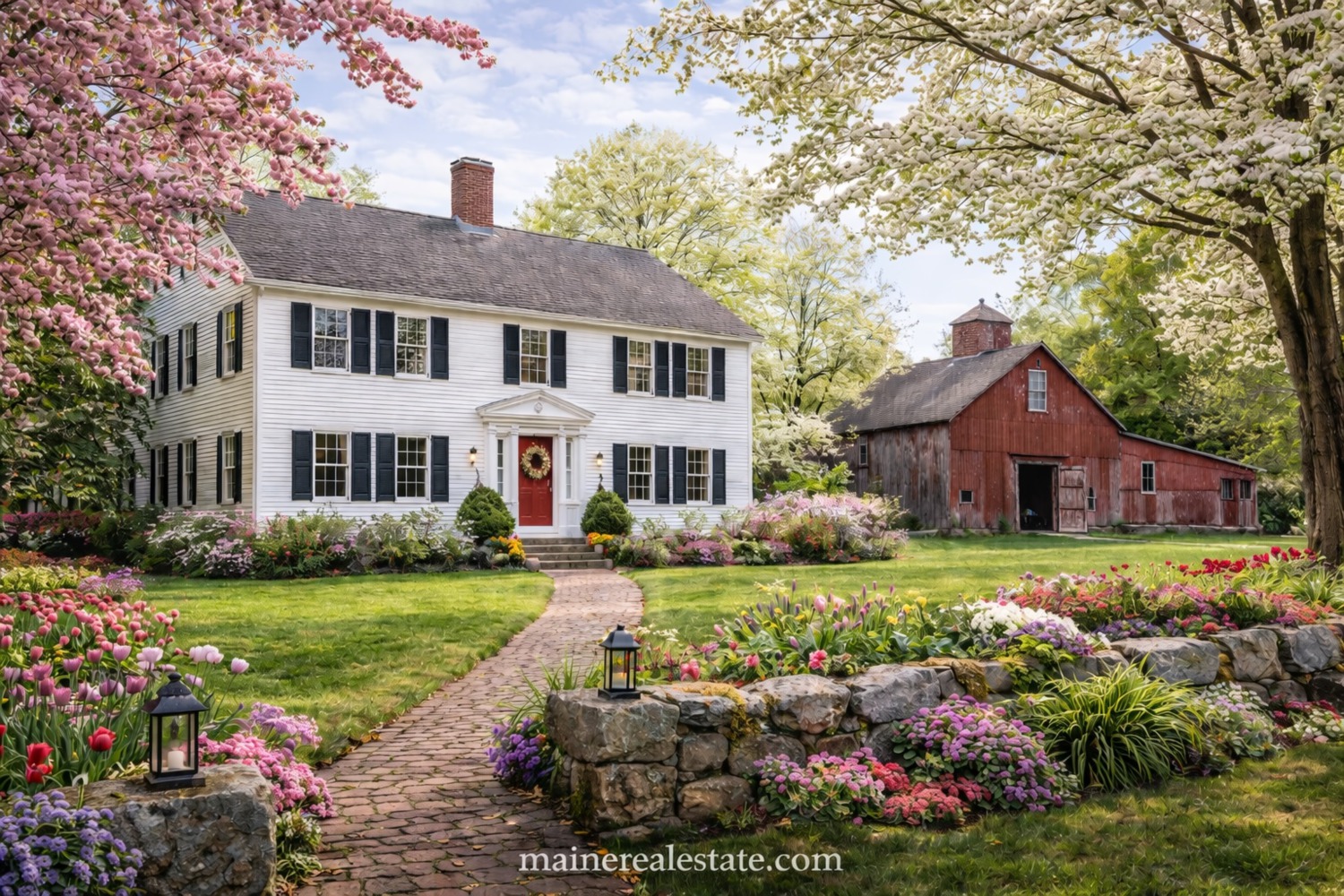
There’s something profoundly compelling about stepping into a home that witnessed the founding of a nation. Walking through the doorway of a historic Maine home means treading on floors worn smooth by generations, running your hand along trim shaped before electricity existed, and living within walls that have stories embedded in their very structure. If you’re considering purchasing an antique home in Maine, you’re not just buying a property, you’re becoming a steward of architectural heritage.
Maine’s landscape is dotted with these remarkable properties, from coastal Federal-style mansions to humble inland farmhouses that have sheltered residents since the 1700s. But purchasing a historic or antique home requires a different approach than buying a contemporary house. This comprehensive guide will walk you through everything you need to know about historic home ownership in Maine.
Understanding Maine’s Architectural Heritage
Maine’s architectural story is written in wood, brick, and stone. The state’s position in early American history means its homes reflect a fascinating progression of building styles, each leaving its fingerprint on the landscape.
Colonial Architecture (1600s to 1780s)
The earliest permanent European structures in Maine were simple Colonial homes, built with practical necessity in mind. These dwellings featured steep roofs designed to shed heavy snow loads, central chimneys that provided heat to multiple rooms, and asymmetrical facades that prioritized function over formality. Many surviving examples showcase hand-hewn timber frames, wide pine boards in the floors, and construction techniques that predate modern building codes.
Colonial homes in Maine typically include leaded glass windows, small rooms with low ceilings, and multiple fireplaces. The craftsmanship evident in these properties, from mortise-and-tenon joints to hand-forged hardware, represents a level of attention that’s difficult to replicate today. When shopping for historic homes Maine, Colonial-era properties often command premium prices due to their rarity and historical significance.
Federal Style (1780 to 1820)
As Maine transitioned to statehood and economic prosperity grew, Federal-style architecture became fashionable among wealthier merchants and landowners. These homes elevated the Colonial form with more symmetrical facades, refined details, and classical proportions inspired by Adam and Regency design. Signature Federal features include elliptical windows above doorways, shallow roof pitches, decorative cornices, and shutters placed specifically for aesthetic balance.
Federal homes represented early Maine’s mercantile success, and many were built in river valleys and coastal towns where trade flourished. Today, purchasing one of these antique homes Maine properties means owning a piece of the state’s commercial heritage. Their size and elegant proportions make them particularly attractive to buyers seeking historic charm with relative livability.
Greek Revival (1825 to 1860)
Greek Revival architecture swept across America in the early nineteenth century, and Maine embraced the style enthusiastically. These striking homes feature bold columns, pediment roofs, and severe geometric lines inspired by classical temples. White painted exterior boards became iconic of this period, creating the pristine appearance we associate with New England villages.
Greek Revival homes tend to be more spacious than their Federal predecessors, with larger rooms and higher ceilings that feel less claustrophobic to modern dwellers. Many can be found in village centers throughout Maine, where they originally served as important community landmarks. If you’re seeking old houses Maine that combine historical significance with relative functionality, Greek Revival properties often represent an excellent compromise.
Victorian Styles (1860 to 1900)
The Victorian era brought exuberance and ornamentation to Maine architecture. Italianate villas with tall narrow windows and elaborate brackets competed with Queen Anne homes featuring irregular rooflines, wraparound porches, and seemingly infinite decorative details. Victorian-era construction introduced advanced building techniques, larger window panes, and more refined plumbing and mechanical systems than earlier styles.
Victorian antique homes Maine properties vary wildly in scale and ambition, from modest Italianate cottages to elaborate Queen Anne mansions. The intricate woodwork, stained glass windows, and unique room configurations of these homes appeal to buyers drawn to distinctive character. However, they also typically require more maintenance attention due to their complex exterior details and period-specific elements.
Cape Cod Style (1700s to present)
Cape Cod homes represent Maine’s most enduring residential style, originally developed to withstand harsh coastal weather. These compact, efficient homes feature 1.5 to 2.5 stories, gable roofs, and modest proportions that fit perfectly within rural Maine landscapes. Later generations have built Cape Cod-style homes continuously, making them one of the most common historic home types you’ll encounter.
Historic Cape Cod homes typically include a central hall plan, with the main living spaces flanking the central chimney. While small by contemporary standards, this arrangement proved extremely livable and efficient. Many Maine buyers specifically seek Cape Cod homes Maine properties for their authentic charm and relatively manageable scale.
What Makes a Home “Antique” in Maine?
In real estate terms, a home is generally considered antique once it reaches a century in age, though the definition varies by local convention and property characteristics. In Maine, homes built before approximately 1920 are commonly categorized as antique, though some designate the threshold at 1930 or even 1940.
The distinction matters for several practical reasons: antique homes predate electrical codes, modern plumbing standards, current insulation materials, and contemporary building techniques. They may contain hazardous materials like lead paint and asbestos, use outdated wiring and plumbing systems, and incorporate building materials that are difficult to repair with modern methods.
However, antique status also confers certain advantages. Historic homes often benefit from more substantial construction, thicker exterior walls, solid hardwood lumber, and assembly techniques designed for durability rather than cost. The materials available in the nineteenth and early twentieth centuries often surpassed what modern builders can economically use today.
Where to Find Historic Homes in Maine
Historic homes aren’t evenly distributed across the state. Understanding where to look helps you focus your search and understand pricing patterns.
Coastal Towns and Villages
Maine’s coast attracted early European settlement and accumulated wealth through maritime trade and fishing industries. Consequently, some of the state’s most impressive historic homes cluster in coastal communities. Towns like York, Kennebunk, and Castine feature exceptional concentrations of Colonial and Federal-era homes. If you’re interested in coastal living, consider exploring properties in York and Kittery or the charming Kennebunk and Kennebunkport areas. Coastal properties typically command premium prices, reflecting both their historical significance and current location desirability.
River Valleys and Inland Trading Posts
Before roads connected Maine’s interior, rivers served as the state’s primary highways. Historic homes line the Kennebec, Androscoggin, and Penobscot valleys, occupying positions where commerce once flourished. These inland areas often offer historic homes Maine options at lower price points than coastal equivalents, while still providing significant architectural character.
Village Centers and Towns
Many of Maine’s village centers preserve remarkable concentrations of nineteenth-century architecture. Walking down the main streets of places like Bethel, Blue Hill, or Brunswick reveals block after block of Federal, Greek Revival, and Victorian-era buildings. These town centers often have local historic districts with preservation guidelines, which impacts both property values and renovation planning.
Rural Farmsteads and Countryside
Scattered throughout rural Maine stand isolated farmhouses, dating back centuries. These properties sit on significant acreage and often require more extensive work, but appeal to buyers seeking privacy and land alongside historic character. Rural Maine fixer upper properties represent an emerging market segment for those willing to invest in substantial renovations.
Explore Historic Communities
Maine’s coastal towns, river valleys, and village centers each offer distinct historic properties at varying price points. Bean Group agents know where to find the best opportunities and can help match your vision with available inventory. Start your historic home search.
Historic Homes vs. New Construction: The Price Equation
Comparing historic home prices to new construction reveals interesting regional patterns. Generally, antique homes Maine properties cost less per square foot than new builds, but the real cost picture emerges once renovation needs are considered.
A well-maintained historic home might sell for $250 to $350 per square foot, while comparable new construction costs $400 to $500 per square foot. However, a historic home requiring significant updating might be priced at $150 to $200 per square foot, reflecting anticipated renovation expenses. The trick lies in accurately estimating those costs before making an offer.
Coastal historic properties command premium pricing, sometimes matching or exceeding new construction rates, due to location desirability combined with limited available inventory. Inland and rural historic homes often offer better relative values, particularly if you’re comfortable with ongoing renovation work.
For first-time buyers considering historic properties, our first-time homebuyer’s guide provides additional context on navigating Maine’s real estate market. Additionally, understanding what’s driving Maine home values in 2026 helps contextualize historic property pricing.
The Critical Home Inspection: What Makes Historic Homes Unique
Inspecting an old houses Maine property requires expertise beyond standard home inspection protocols. You need an inspector familiar with historic construction, its inherent qualities, and its vulnerabilities.
Lead Paint Assessment
Homes built before 1978 almost certainly contain lead paint. This requires specific handling during any work involving scraping, sanding, or removal. Lead remediation adds cost and complexity to renovation projects, but professional abatement services can address the hazard safely. Testing should be a standard part of your purchase inspection.
Asbestos and Hazardous Materials
Asbestos appears in pipe insulation, floor tiles, ceiling tiles, roofing materials, and joint compounds in homes built before the 1980s. While asbestos isn’t inherently dangerous if left undisturbed, renovation work might require professional assessment and removal. Other hazardous materials to investigate include vermiculite insulation potentially containing asbestos, old electrical panels containing polychlorinated biphenyls (PCBs), and materials containing arsenic-based preservatives.
Structural Assessment
Historic homes Maine properties often have foundations built with stone and mortar, sometimes without concrete footings, a system that can shift and settle over time. An inspector should evaluate whether settlement has caused problems or simply stabilized over decades. Some historic structures benefit from the flexibility of older construction techniques, while others suffer from compromised integrity.
Wood-frame homes with original hand-hewn timber may contain hidden decay or insect damage. Exterior wood components particularly need careful evaluation, as paint failure exposes wood to moisture and degradation. Roof framing should be assessed for strength and condition, especially in homes that haven’t received recent maintenance.
Mechanical Systems
The electrical system in a historic home might be the original knob-and-tube wiring, a dangerously outdated technology unsuitable for modern power demands. Even newer historic homes might have insufficient grounding or outdated panel capacity. Budget accordingly for electrical system upgrades.
Plumbing presents similar challenges. Galvanized steel pipes corrode from the inside, reducing water pressure and potentially contaminating water. Cast iron drains become brittle and fail. These systems typically need replacement, not just repair, to ensure reliable function.
Heating systems vary tremendously. An original fireplace might be purely decorative, supplemented by a modern furnace. Oil heating systems might include underground tanks requiring eventual removal. Historic homes often lack ductwork suitable for central air conditioning, requiring creative solutions for cooling.
Windows and Doors
Original windows, whether single-pane colonial or multi-pane Victorian, offer authentic charm but poor thermal performance. Replica windows can improve efficiency while maintaining appearance, though high-quality period-appropriate replacements cost significantly more than standard modern windows. Historic homes Maine with intact original windows sometimes command premiums from preservation-minded buyers.
Doors and door frames reveal similar issues: original materials look beautiful but might not seal well or operate smoothly. The choice between restoration and replacement involves both aesthetic and practical considerations.
Considering a Historic Home in Maine?
Our Bean Group agents have experience with historic and antique properties across Southern Maine. We can help you find the right home, connect you with preservation-minded inspectors and contractors, and guide you through the unique considerations of buying a historic property. Talk to an Agent.
Restoration Costs and Planning
Budgeting for historic home restoration requires understanding different categories of work.
Essential Systems Upgrades
Replacing electrical systems, plumbing, and heating components isn’t optional. These systems either work adequately or they don’t. Budget $15,000 to $40,000 for electrical work depending on the home’s size and desired service levels. Plumbing replacement might cost $20,000 to $60,000 depending on the extent of work and material choices. HVAC system installation typically ranges from $8,000 to $25,000 depending on the heating fuel and system type you select.
Structural and Foundation Work
Stone foundation repair, structural timber reinforcement, or foundation stabilization represents specialized work requiring experienced contractors. Costs vary enormously depending on the specific issues, from $5,000 for minor pointing work to $50,000 or more for significant structural remediation. Always obtain multiple opinions before committing to major structural work.
Window and Door Restoration
Restoring original windows might cost $500 to $1,500 per window depending on the condition and desired restoration level. Replica replacements cost $400 to $1,200 per opening. Deciding which windows to restore versus replace represents one of the more personal renovation decisions in a historic home.
Cosmetic and Aesthetic Work
Stripping paint to expose original wood, repairing or replacing crown molding, refinishing hardwood floors, and updating bathrooms and kitchens while respecting the home’s character constitute the category of work that gives homes their renewed vitality. These projects range from a few thousand dollars to hundreds of thousands depending on the home’s size and your ambitions.
The Soft Cost Reality
Renovation work on historic homes frequently costs more than initial estimates suggest. Discovering hidden damage, rotten wood once plaster or flooring is removed, structural issues uncovered during wall opening, complications revealed during mechanical system installation, is standard rather than exceptional. Conservative renovation budgets include a 20 to 30% contingency fund specifically for these inevitable discoveries.
Historic Preservation Tax Credits
Maine and the federal government offer financial incentives for preserving historic properties, providing meaningful offsets to renovation costs.
Federal Historic Preservation Tax Credit
The most significant incentive comes federally: a 20% tax credit for qualified rehabilitation expenses on properties listed on the National Register of Historic Places or contributing to a certified local historic district. To qualify, the project must meet the Standards for Historic Preservation. Eligible properties include owner-occupied residences, rental properties, and owner-occupied commercial buildings.
The process involves consulting with preservation professionals to ensure work meets standards, obtaining approval before work begins, and documenting expenses carefully. The tax credit applies to the actual costs of restoration, not new improvements, but can significantly offset project costs, a $100,000 restoration could generate a $20,000 federal tax credit.
Maine State Historic Preservation Tax Incentives
Maine offers property tax exemptions for historic properties in certified local historic districts. The state’s homestead exemption can also benefit historic property owners. Consult with a tax professional and the Maine Historic Preservation Commission to understand available incentives for your specific property.
National Register of Historic Places
Properties listed on the National Register qualify for federal tax credits and often enjoy protection from demolition. The National Register listing doesn’t restrict what you can do with your property, but it enables you to access preservation incentives and demonstrates historical significance. Many antique homes Maine are already listed; others might qualify for nomination.
Local Historic Districts and Preservation Guidelines
Many Maine communities have established local historic districts with design guidelines governing exterior modifications. These guidelines vary but typically address roof material, window design, paint colors, and siding materials. While preservation guidelines might restrict certain changes, they also preserve neighborhood character and property values.
Before purchasing a historic home in a district, review the specific guidelines. Some are flexible and focused on maintaining general character; others are quite prescriptive. Understand whether you’re comfortable with any restrictions before committing to the property.
Working with Preservation-Minded Contractors
Not all contractors understand historic construction or respect preservation principles. Finding contractors experienced with old houses Maine is essential.
Identifying Qualified Professionals
Ask potential contractors about their specific experience with homes of similar age and style. Request references from historic home projects they’ve completed. The Maine Preservation Commission and local historical societies often maintain lists of recommended preservation contractors.
Look specifically for contractors who understand historic materials, they know the difference between appropriate mortar for an 1850s foundation and modern high-strength mortar that can damage stone. They understand that restoring original windows might serve better than replacement. They appreciate the difference between cosmetic issues and actual problems requiring intervention.
Structural Specialists and Consultants
For significant structural issues, foundation work, or complex restoration questions, consider hiring specialists separate from the general contractor. Structural engineers experienced with historic buildings understand how old homes can successfully accommodate forces that would concern those familiar only with modern construction. Historic preservation consultants guide decisions about maintaining character while ensuring functionality.
Communication and Documentation
Establish clear communication protocols before work begins. Historic renovation frequently involves discovering unexpected conditions that require decisions about how to proceed. Having established communication channels prevents costly mistakes from miscommunication.
Document the home’s condition before work begins, professional photographs and written descriptions. These records prove valuable if issues arise during restoration, help in historic preservation grant applications, and simply preserve the memory of the home’s condition as it evolves through renovation.
Energy Efficiency Upgrades for Historic Homes
Historic homes are notoriously energy-inefficient compared to modern standards. However, improving efficiency while respecting historic character requires thoughtful approaches.
Insulation Strategies
Adding exterior insulation visibly alters the home’s appearance, while cavity wall insulation might be impossible in thick masonry walls. Many preservation-conscious owners prioritize attic insulation, adding resistance where it’s relatively invisible, then focus on air sealing rather than wholesale insulation additions. Modern spray foam might damage historic wood framing, making mineral wool or cellulose insulation more appropriate.
Window and Door Improvements
Restoring original windows to include weather sealing, adding removable interior storms, or using period-appropriate window films improves thermal performance while maintaining appearance. Modern windows look wrong on historic homes; working with what exists, or finding quality replicas, serves both aesthetics and efficiency.
Mechanical System Selection
Modern heat pumps and high-efficiency furnaces operate more efficiently than older systems. However, radiator-based heating from the original system might be maintained with a modern boiler, or completely replaced with less visible modern infrastructure. These decisions involve balancing efficiency, aesthetics, and cost.
Air Sealing
Controlling air infiltration often provides better returns than insulation improvements in historic homes. Sealing foundation cracks, addressing gaps around penetrations, and sealing rim joist areas prevents conditioned air from escaping and outdoor air from entering.
Insurance Considerations for Historic Properties
Standard homeowners insurance might not adequately cover historic homes, particularly if significant original materials or specialized systems are involved.
Agreed Value Coverage
Historic homes might benefit from agreed value coverage, where you and the insurer agree on the property’s replacement cost. This avoids disputes about valuation following a loss and ensures you can actually rebuild the home if necessary.
Replacement Cost Options
Some insurers offer special coverage recognizing that authentic replacement materials and specialized contractors cost more than standard alternatives. If your home contains distinctive original features you’d want to restore authentically, ensure your insurance policy accommodates that.
Verification and Documentation
Providing insurers with detailed documentation, professional photographs, structural reports, and descriptions of significant original features, helps establish value and prevents disputes. Some insurers specialize in historic property coverage and might offer better terms than standard carriers.
The Emotional and Intangible Rewards of Historic Ownership
Beyond practical considerations, purchasing and restoring a historic home offers rewards that transcend financial calculation.
Living in a historic home connects you to the past and to the generations who came before. You walk down floors worn smooth by countless feet and maintain a physical link to history. The craftsmanship evident in the home, carefully fitted joints, hand-planed boards, architectural details executed with care, speaks to a slower pace and different values than contemporary construction.
There’s genuine satisfaction in bringing a neglected historic property back to vitality, in understanding its history and sharing that understanding with visitors, in making choices that respect the original builder’s intentions while adapting the home for contemporary life. Historic home ownership can become a passion, with owners becoming expert in their home’s materials, history, and techniques.
Common Surprises and Pitfalls in Historic Home Ownership
Experienced historic home owners consistently identify several surprises they wish they’d anticipated.
Hidden Damage and Scope Creep
Opening a wall to run new electrical often reveals rot, requiring not just electrical installation but structural remediation. Projects consistently exceed initial estimates because each layer of renovation reveals additional issues. Budget conservatively and maintain flexibility.
Difficulty Finding Materials and Services
Original materials might be obsolete, requiring specialized sourcing and expertise. Finding someone who can properly restore an 1880s ornamental plaster ceiling requires specific knowledge. Original floor boards might need custom milling. These requirements inflate both time and cost.
Incompatible Modernization Attempts
Previous owners frequently made well-intentioned but historically inappropriate modifications, vinyl siding over original clapboard, dropped ceilings concealing original plaster and molding, bathroom and kitchen updates completed without regard to the home’s character. Undoing these changes can cost more than the original modifications.
Utility and Comfort Expectations
Historic homes are genuinely smaller than contemporary homes, have less storage, feature less insulation, and include fewer bathrooms. If you’re accustomed to modern comfort standards, the transition requires adjustment. Some buyers discover that owning their dream historic home involves accepting limitations and inconveniences they hadn’t fully appreciated.
Financing and Appraisal Challenges
Some lenders hesitate to finance historic homes requiring substantial renovation, particularly if comparable sales data is limited. Appraisers sometimes undervalue historic properties that don’t fit into standard comparable categories. Securing financing might require a specialized lender familiar with historic properties.
Making the Decision: Is Historic Home Ownership Right for You?
Historic home ownership suits people who appreciate character and history, have patience for renovation challenges, and enjoy learning about building systems and materials. It requires flexibility when unexpected discoveries occur, realistic expectations about timeline and cost, and willingness to sometimes prioritize character over contemporary convenience.
It might not suit those seeking a finished product, preferring not to think about their home’s infrastructure, or needing predictable housing costs. Historic home renovation isn’t a profit-minded investment, most restoration work costs more than the value it adds to the property. But as a lifestyle choice, it offers rewards that purely financial analysis misses.
If you’re relocating to Maine from another state and considering historic properties, our guide to relocating from Boston or New York to Maine provides helpful context. Also explore our insider’s guide to living in Portland Maine or our guide to living in Scarborough to understand various Maine communities better.
Conclusion: Becoming Steward of Maine’s Architectural Heritage
Purchasing a historic home in Maine, whether a Colonial farmhouse, Federal merchant’s mansion, or Victorian Queen Anne, means joining a lineage of caretakers maintaining these structures through changing times. From old houses Maine sitting on rural hillsides to antique homes Maine gracing village centers, these properties represent irreplaceable pieces of the state’s cultural and architectural heritage.
The path to historic home ownership involves more complexity than purchasing contemporary real estate. Thorough inspection by professionals experienced with historic construction, realistic budgeting that includes substantial contingency funds, careful contractor selection, and research into preservation incentives transform the process from daunting into manageable. Understanding Maine’s architectural styles, recognizing where historic properties concentrate, and honestly assessing your comfort with renovation uncertainty position you for success.
New England colonial homes and Cape Cod styles, Victorian mansions and Federal farmhouses, Maine’s architectural diversity means options exist for various aesthetic preferences and budgets. Whether you’re drawn to the refined elegance of Greek Revival or the exuberant ornamentation of Queen Anne, a historic home awaits.
If you’re ready to explore historic and antique homes in Maine, experienced real estate professionals who specialize in historic properties can guide you toward opportunities matching your vision and budget. The reward, living in a home that carries the weight of history, the craftsmanship of earlier centuries, and the possibility of renewal for generations to come, makes the journey worthwhile.
Frequently Asked Questions
What’s the difference between a historic home and an antique home in Maine?
While the terms are often used interchangeably, “historic” typically refers to homes that are registered or contribute to a historic district, while “antique” generally means homes over 100 years old. In Maine, homes built before approximately 1920 are commonly called antique, though the threshold varies by convention. Historic designation may confer tax benefits and preservation requirements, while antique status mainly describes age.
How much does it typically cost to restore a historic home in Maine?
Restoration costs vary dramatically based on the home’s condition and scope of work. Essential systems upgrades (electrical, plumbing, HVAC) typically range from $43,000 to $145,000 combined. A 20 to 30% contingency fund is advisable because historic renovations frequently reveal hidden issues. Many restoration projects cost considerably more than the property’s final appraised value, making historic home ownership primarily a lifestyle choice rather than an investment.
Can I get a federal tax credit for restoring a historic home in Maine?
Yes. The federal historic preservation tax credit provides a 20% credit for qualified rehabilitation expenses on properties listed on the National Register of Historic Places or contributing to a certified local historic district. The credit applies to restoration costs (not new improvements) and requires that work meet the Standards for Historic Preservation. Consulting with preservation professionals is essential to ensure your project qualifies.
What hazardous materials should I test for in an old Maine home?
Homes built before 1978 almost certainly contain lead paint requiring specific handling during renovation. Homes built before the 1980s may contain asbestos in insulation, floor tiles, ceiling materials, and pipe wrapping. Other hazardous materials include PCBs in old electrical panels and arsenic-based wood preservatives. Professional testing should be part of your home inspection, and hazardous material assessment influences both renovation costs and timelines.
Are original windows in historic homes worth restoring or should I replace them?
This depends on several factors including the windows’ historical significance, your budget, and your restoration priorities. Restoring original windows costs $500 to $1,500 per window but preserves authenticity and often appeals to historic preservation advocates. High-quality replica windows cost $400 to $1,200 per opening and provide better energy efficiency while maintaining appearance. Homes with intact original windows sometimes command premiums from preservation-minded buyers, making restoration a worthwhile investment.
How do I find contractors experienced with historic home restoration?
The Maine Preservation Commission and local historical societies maintain lists of recommended preservation contractors. Ask potential contractors about specific experience with homes of similar age and style, and request references from completed historic projects. Look for contractors who understand historic materials and respect preservation principles, who know the difference between cosmetic issues and actual problems, and who appreciate appropriate restoration techniques specific to your home’s era.
What financing options exist for historic homes that need substantial renovation?
Some lenders hesitate to finance historic homes requiring substantial work, particularly if comparable sales data is limited. FHA loans and renovation-specific loans like Fannie Mae HomeStyle loans may work for historic properties. Specialized lenders familiar with historic real estate may offer better terms than standard mortgage providers. Consider speaking with local banks and credit unions about their experience with historic property lending, and consult with a mortgage professional experienced in financing historic homes.
Is historic home ownership a good financial investment?
Generally, historic home ownership should not be considered a profit-minded investment. Most restoration work costs more than the value it adds to the property’s appraised value. However, historic home ownership can be an excellent lifestyle choice offering rewards including living in character-filled homes with authentic charm, becoming stewards of architectural heritage, and participating in preservation communities. Federal and state tax credits provide some financial offsets, but these rarely fully cover renovation costs.
Explore Maine’s Historic Properties with Expert Guidance
Whether you’re drawn to a Federal-era farmhouse in York County, a Victorian in Portland’s West End, or a Cape Cod colonial in a midcoast village, our Bean Group team can help you navigate the unique process of buying and owning a historic Maine home. We’ll connect you with the right inspectors, contractors, and resources to make your purchase a success.