
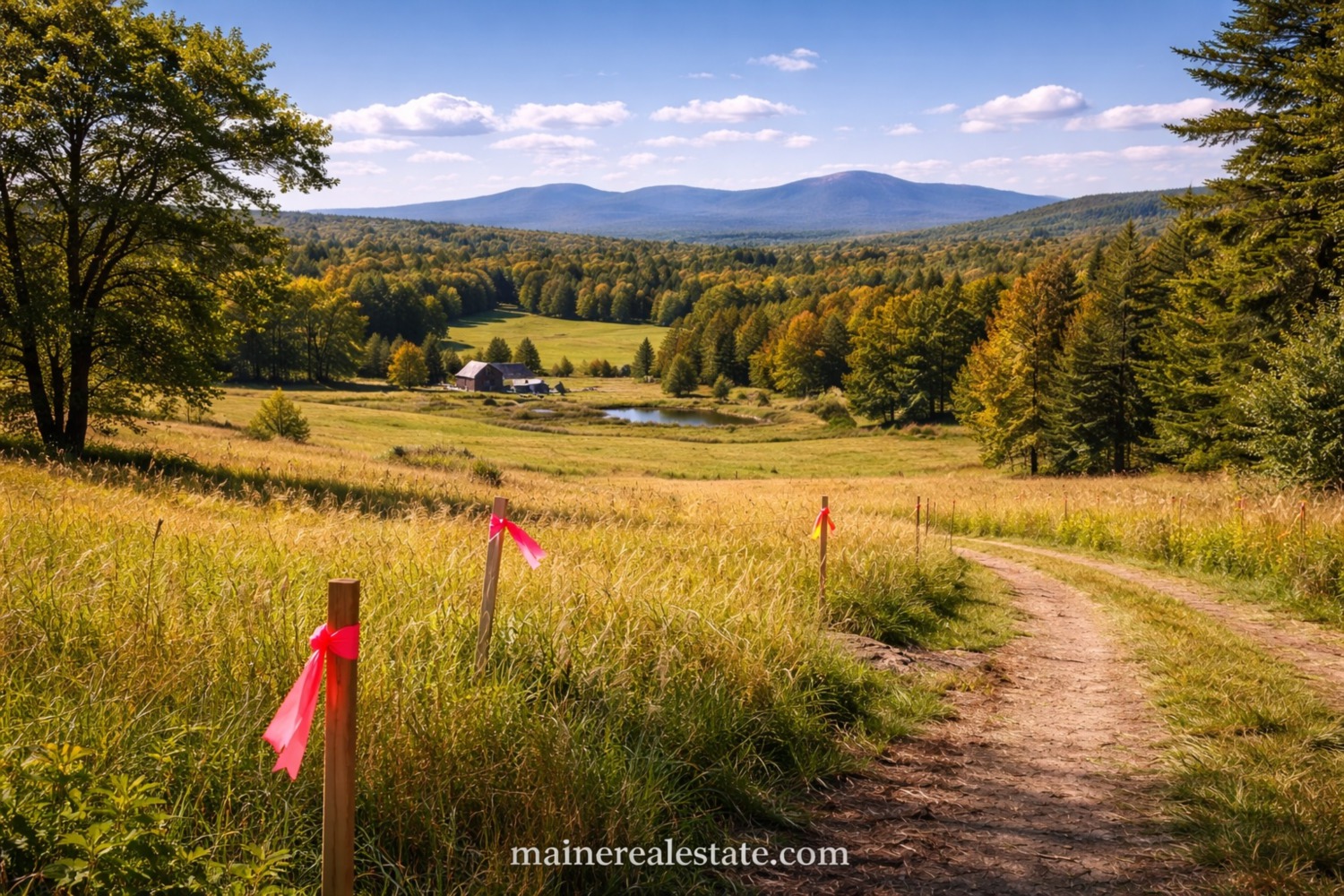
Maine’s rugged natural beauty, strong sense of community, and relatively affordable land prices make it an increasingly attractive destination for those looking to purchase property. Whether you’re dreaming of building a custom home, starting a farm, or simply investing in raw acreage, understanding the Maine land market is essential. This comprehensive guide walks you through everything you need to know about buying land in Maine, from understanding different property types to navigating the complexities of financing, zoning, and site evaluation.
Why Buying Land in Maine Makes Sense
Maine offers something that’s becoming increasingly rare in New England: accessible land at reasonable prices. With over 90% of the state still forested and a population density far below the national average, finding raw land Maine properties remains possible without breaking the bank. The state’s strong environmental protections, relatively low property taxes compared to neighboring states, and welcoming communities attract buyers from across the country.
But Maine’s land market isn’t one-size-fits-all. The dramatic differences between coastal properties, inland acreage, and rural farmland mean that your buying strategy, budget, and timeline will vary significantly depending on location and intended use. Understanding these variables upfront helps you make smarter decisions and avoid costly mistakes.
In this guide:
Whether you’re interested in living in Portland, coastal properties in Cape Elizabeth, or affordable inland areas like Gorham and Windham, our team can guide you through the land buying process. Connect with our land specialists today to discuss your vision and budget.
Types of Land Available: Understanding Your Options
When exploring Maine land for sale, you’ll encounter several distinct property categories, each with unique characteristics, costs, and considerations.
Raw Land and Undeveloped Acreage
Raw land Maine purchases typically refer to completely undeveloped properties without utilities, road access, or existing structures. This category offers the most flexibility and often the lowest price per acre. Raw land might feature dense forest, open meadow, wetlands, or a combination of terrain types.
The appeal of raw land is straightforward: you control the development vision entirely. You can build where you want, shape the landscape according to your needs, and create exactly what you envision. However, raw land Maine properties require significantly more due diligence than improved lots. You’ll need to investigate soil composition, drainage patterns, tree species and timber value, wildlife habitat, and access feasibility. Many raw land purchases fail to move forward to construction because buyers underestimate the costs and complexity involved in preparing the site for building.
Maine Building Lots
Building lots represent the middle ground between raw land and ready-to-build properties. These parcels have been surveyed, typically have deeded road access, and often have passed preliminary site evaluations. Many Maine building lots come with percolation test results already completed, environmental assessments partially done, or engineering studies available.
Maine building lots command a premium over raw acreage, sometimes 30 to 50 percent higher per acre, because they reduce the timeline and uncertainty. The trade-off is less land flexibility; you’re working within established lot lines and existing road networks. For buyers who want to move quickly from purchase to construction, Maine building lots represent a practical middle path.
Farmland and Agricultural Properties
Maine farmland has experienced renewed interest as agricultural tourism, local food systems, and value-added farm products gain popularity. Farmland properties range from small hobby farms suitable for residential gardens and small-scale livestock to substantial operations with established buildings, equipment, and customer bases.
Purchasing Maine farmland requires additional considerations beyond standard land evaluation. Soil quality, water availability, drainage infrastructure, existing farm buildings, equipment included in the sale, and the condition of fences and boundaries all factor into value. Many Maine farmland purchases qualify for special current use tax assessment programs, which can dramatically reduce annual property taxes, a topic we’ll explore in detail later.
Woodlots and Timber Properties
Maine’s forests represent significant economic value. Woodlot purchases appeal to investors, timber harvesters, and conservation-minded buyers. A Maine land purchase focused on timber potential requires understanding timber species, stand age, growth rates, harvest history, and market conditions for different wood types.
Woodlots often qualify for special tax programs designed to encourage forest stewardship. Understanding current use taxation and forest management practices can substantially impact the long-term economics of woodlot ownership.
Regional Pricing and Market Variations
Maine land prices vary dramatically by region, with coastal areas commanding premiums of 200 to 400 percent above inland properties. Understanding these regional variations helps you target searches to your budget and set realistic expectations.
Coastal and Near-Coastal Properties
Cumberland and York counties represent Maine’s most expensive land market. Parcels with ocean views or direct shoreline access regularly sell for $50,000 to $150,000 per acre or more. Even properties within a few miles of the coast command significant premiums, ranging from $15,000 to $40,000 per acre depending on exact location and utilities.
These higher prices reflect limited supply, strong demand from out-of-state buyers, and robust tourism economies supporting property values. Coastal Maine land for sale typically moves quickly, particularly properties that are buildable immediately. Learn more about coastal communities like Cape Elizabeth or explore other coastal options north of Portland.
Mid-Coast and Island Properties
The mid-coast region (Lincoln, Knox, and Waldo counties) offers a middle ground. Properties with partial ocean views or those located in charming waterfront communities range from $8,000 to $30,000 per acre. These areas offer easier access to coastal amenities without the steepest price tags, making them increasingly popular with those seeking character and community without coastal maximums.
Inland and Northern Maine
Inland properties in Oxford, Franklin, Somerset, and Piscataquis counties, as well as northern Maine generally, represent the state’s most affordable raw land Maine opportunities. Undeveloped acreage in these regions frequently sells for $1,000 to $5,000 per acre, with some remote properties even lower. These areas appeal to those prioritizing acreage, privacy, and lower upfront costs.
The trade-off involves longer commutes to service centers, fewer immediate amenities, and potentially more challenging site development. However, for buyers prioritizing land area, forestry value, or agricultural potential, inland Maine offers exceptional value. Explore more affordable inland alternatives near Portland.
Unsure Which Region Is Right for You?
Maine’s diverse regions offer different advantages. Explore our guides to beach communities like Scarborough, the Portland area, and southern Maine overall to find your ideal location. Contact our team for personalized recommendations.
Zoning and Land Use Regulations
Understanding Maine land zoning is non-negotiable before purchase. Zoning violations, restrictions on use, and regulatory changes have derailed countless land purchases and development plans.
State-Level Regulations
Maine’s Department of Environmental Protection (DEP) maintains significant authority over land use through state regulations. Shoreland zoning, the regulations governing properties within 250 feet of coastal waters or within 75 feet of inland rivers and streams, represents one of the most restrictive and important regulatory frameworks. If your Maine land purchase is anywhere near water, shoreland zoning will profoundly impact what you can build, where structures must be positioned, and what activities are permitted.
The state also enforces rules on sand and gravel extraction, timber harvesting, and subdivision of land. Any Maine land for sale that’s currently subdivided or showing evidence of multiple recent owners may have triggered subdivision regulations that affect future parcel division.
Municipal Zoning and Ordinances
Individual municipalities maintain their own zoning codes, ordinance systems, and approval procedures. This is where most regulatory complexity lives. Some towns maintain relatively permissive zoning allowing residential use on two to five acre minimum lots; others require 20, 50, or even 100+ acre parcels for residential construction.
Before committing to a Maine land purchase, obtain the municipal zoning map and review the specific ordinance code for your parcel’s zone. Critical items to investigate include:
- Minimum lot size for residential use
- Setback requirements from property lines and roads
- Height restrictions on structures
- Road frontage requirements (often 150 to 250 feet)
- Permitted uses in the zone (residential, agricultural, commercial, etc.)
- Special permits or variances required for certain uses
- Density restrictions if subdivision is planned
Many municipalities require variances or conditional use permits for activities that don’t perfectly fit zoning categories. Understanding whether your intended use requires a variance, and whether the town likely grants such variances, should factor heavily into your Maine building lots or raw land Maine assessment.
Deed Restrictions and Covenants
Beyond public zoning, private deed restrictions can limit land use. Some properties carry deed language restricting commercial activity, requiring structures to be set back certain distances, or prohibiting subdivision. Always review the full deed chain before closing, as inherited restrictions can persist for decades.
Find Your Perfect Maine Land
Buying land in Maine requires understanding zoning, environmental issues, and development potential. Bean Group agents help land buyers navigate Maine’s unique land market and identify properties matching your goals. Let’s explore Maine land opportunities.
Site Evaluation: The Critical Homework
Before committing funds to any Maine land purchase, thorough site evaluation prevents expensive mistakes and regulatory surprises. This section covers the essential investigations for buying land in Maine responsibly.
Soil Testing and Percolation Tests
Soil composition determines whether your property can support septic systems, whether building will require extensive excavation or engineering, and what drainage challenges might emerge. Percolation tests, often called “perc tests,” measure how quickly soil absorbs water. Most municipalities require perc tests showing results suitable for septic system installation before issuing a building permit.
A standard perc test costs $300 to $800 and typically takes two to three weeks, as tests must observe soil behavior over time. The results determine the maximum drain field size required and the type of septic system permitted. Failing perc tests don’t necessarily mean the property is unbuildable; advanced treatment systems exist; but they dramatically increase infrastructure costs.
For Maine building lots, perc tests may already be completed; for raw land Maine parcels, budget for testing costs and timeline before assuming buildability.
Soil Type and Bearing Capacity
Beyond septic suitability, understanding soil type matters for foundation stability and construction costs. High-quality builders’ soil, sand and gravel with proper drainage, allows standard foundation systems and minimal site preparation. Clay-heavy or rocky soils increase excavation costs and may require specialized foundations.
Soil scientists call the ability of soil to bear weight “bearing capacity.” Poor bearing capacity soils require expensive engineered foundations or costly soil replacement. A professional soil evaluation, often part of septic design, clarifies these issues.
Access and Road Conditions
Your property must be accessible by way of a public road or a maintained private road with legal right-of-way. This is non-negotiable; properties without road access cannot be built on or legally occupied. When evaluating Maine land for sale, verify:
- Whether road access is via a town-maintained public road or private road
- The condition and maintenance standards of private roads
- Whether private road rights-of-way are explicitly documented in deeds
- Whether road easements allow seasonal or year-round access
- Whether road improvements or maintenance fees are required
Maine building lots almost always feature public road frontage; raw land Maine properties more frequently require private road access. Private road properties can be substantially less expensive, but they carry maintenance responsibilities and occasional neighbor disputes. Ensure all road rights are clearly documented and legally sound before closing.
Water Availability and Sources
Properties without municipal water service require wells. Before purchasing Maine land, understand:
- Well availability on the property (can a productive well be drilled?)
- Whether a shared well arrangement or individual well is necessary
- Well drilling costs (typically $3,000 to $15,000 depending on depth)
- Water testing requirements and results if available
- Seasonal water availability (some shallow wells fail in drought years)
If your intended use involves significant water demand, commercial operations, irrigation, or large households, well capacity becomes critical. Test the well if one exists; for new properties, well contractors can provide preliminary assessments of drilling likelihood and expected depth.
Utility Availability
Electricity, natural gas, and communications infrastructure availability dramatically impact building costs and quality of life. Properties without utility proximity require:
- Power line extensions (often $15,000 to $50,000+ for significant distances)
- Propane or oil heating systems instead of natural gas
- Septic systems instead of municipal sewer
- Private water wells instead of municipal water
- Limited internet options (crucial for those working remotely)
Understanding exactly which utilities are available at the property boundary versus requiring expensive extensions should factor into your Maine land purchase budget and feasibility assessment. For remote work considerations, learn more about living in southern Maine where internet accessibility is generally strong.
Septic Systems and Wastewater Management
For any Maine land purchase not connected to municipal sewer, septic system viability is paramount. Maine Department of Environmental Protection regulations govern septic design, installation, and maintenance stringently.
Septic System Types and Costs
Conventional septic systems, a buried tank with a drain field, represent the baseline. Installation costs range from $4,000 to $10,000 for standard systems on favorable sites. Difficult sites, with poor soils, high water tables, or limited space, require advanced treatment systems costing $15,000 to $40,000 or more.
Alternative systems include mound systems (elevated drain fields for high water table properties), sand filters, constructed wetlands, and aerobic treatment systems. Each has specific applications, costs, and regulatory requirements. If perc tests indicate poor soils, budget for advanced systems when evaluating Maine building lots or raw land Maine affordability.
Septic Regulations and Inspections
Maine’s Subsurface Wastewater Disposal Rules govern septic design and placement. Properties must maintain 75 feet of setback from lakes, rivers, and streams; 100 feet from wetlands; and specified distances from wells and property lines. On small lots, these setbacks can consume the entire buildable area.
Municipal approval of septic design is required before construction. If your Maine land for sale is on a small lot, verify during your evaluation that septic placement is feasible and compliant.
Wells, Water Quality, and Testing
If your property relies on a private well, water quality testing is essential. Maine Department of Health and Human Services recommends testing for bacteria, nitrates, arsenic, and other contaminants. Testing costs $100 to $400 and provides peace of mind about water safety.
Existing wells on properties should be tested before closing. New properties requiring well drilling should factor drilling costs, water testing, and potential treatment systems (if contamination is discovered) into budgets.
Special Tax Programs: Building Wealth Through Smart Classification
Maine offers several tax programs that can dramatically reduce annual property tax burden. Understanding these programs when buying land in Maine can result in substantial long-term savings.
Tree Growth Tax Program
The Tree Growth Tax Program incentivizes forest stewardship by allowing qualified forested properties to be assessed at timber value rather than development value. The difference can be dramatic; a 50-acre parcel that might be assessed at $100,000 for property tax purposes might be valued at $15,000 under Tree Growth Program rules.
To qualify, properties must meet minimum acreage requirements (typically 10 acres), maintain forest management plans, and commit to the program (though withdrawal is possible with some penalties). For anyone purchasing Maine farmland or woodlots with significant forested acreage, investigating Tree Growth eligibility should be priority. Annual property taxes under this program can be just a few hundred dollars versus thousands.
Farmland Current Use Taxation
Similar to Tree Growth, the Farmland Current Use Taxation program assesses agricultural land at use value rather than development value. Properties must be actively farmed, meet minimum acreage requirements (typically 5 to 10 acres depending on use), and stay in the program to maintain the preferential assessment.
For Maine farmland purchases, this program can reduce annual taxes by 50 to 80 percent. It’s one of the most valuable incentives available to agricultural landowners.
Open Space Tax Program
Open space properties managed for wildlife habitat, recreation, or conservation can qualify for preferential property tax assessment under Maine’s Open Space Tax Program. This program suits those managing land for conservation purposes or public recreation while still maintaining private ownership.
Maximize Your Investment
Understanding property tax implications is crucial for long-term financial planning. Our specialists can help you identify tax programs that apply to your land purchase and calculate long-term costs. Get a property valuation or reach out to our team for a personalized consultation.
Financing Challenges and Creative Solutions
Financing raw land Maine purchases presents challenges distinct from traditional home mortgages. Most conventional lenders are reluctant to finance undeveloped acreage, particularly if septic or well feasibility is unproven.
Bank and Credit Union Financing
Community banks and credit unions familiar with local land markets are more likely to finance Maine land purchases than national lenders. Expect:
- Higher interest rates than home mortgages (1 to 3% above current home rates)
- Larger down payments (25 to 50% instead of standard 20%)
- Shorter loan terms (10 to 15 years instead of 30)
- Requirement for completed perc tests and site plans
- Requirement that you have contractors lined up and timeline established
Shopping among local lenders and presenting a detailed plan increases approval likelihood.
Construction Loans and Bridge Financing
If you’re buying Maine building lots or raw land Maine with immediate construction plans, combined construction and mortgage financing sometimes offers better terms than pure land loans. These loans finance the land purchase and subsequent construction together, converting to traditional mortgages upon completion.
Cash and Alternative Approaches
Many successful raw land Maine purchases occur with cash offers or significant cash down payments. This reflects both lender reluctance and the reality that many land buyers are established individuals with capital available.
Seller financing, where the property owner acts as lender, appears increasingly in Maine land sales. Terms vary widely; however, seller financing often requires substantial down payments and balloon payments (large payments due at the end of the term).
Understanding Property Rights and Legal Considerations
Before closing any Maine land purchase, legal review ensures your rights are protected and no hidden complications exist.
Deed Review and Title Search
A title search confirms the seller owns the property without encumbrances and identifies any mortgages, liens, or restrictions affecting the property. Title insurance protects your investment against future claims to ownership. Budget $300 to $800 for title search and insurance.
Easements and Right-of-Way Agreements
Easements, rights to use portions of your property for specific purposes, may exist for utility lines, roads, or drainage. Identify easements during title search and understand their implications. Access easements benefiting neighbors or utilities crossing the property are normal; however, some easements can complicate your intended use.
Environmental Assessments
Phase I environmental assessments identify potential contamination from prior uses. If the property has any industrial history, significant prior structures, or unusual characteristics, environmental assessment is prudent. Costs range from $1,500 to $3,000.
Road Access: Public Versus Private Considerations
The distinction between town-maintained public roads and private roads significantly impacts property value, maintenance responsibility, and costs.
Town-Maintained Public Roads
Maine building lots almost always front public roads maintained by municipalities. This provides:
- No maintenance responsibility or costs for you
- Assured year-round access and snow removal
- Higher resale value and marketability
- Easier financing and insurance
However, public road access may come with:
- Setback requirements from road centerlines
- Restrictions on commercial signage or uses
- Slower permitting timelines (public road frontage requires town approval)
- Less privacy
Private Roads and Shared Driveways
Raw land Maine properties frequently access via private roads or shared driveways. Benefits include:
- Lower purchase price
- Greater privacy
- More control over road appearance and standards
- Potential for gated or restricted access
Challenges include:
- Maintenance costs shared with neighbors (typically $100 to $500+ per year)
- Difficulty financing (some lenders won’t finance private road properties)
- Potential disputes with co-owners over maintenance
- Slower winter road treatment
- Resale complications (buyers worry about access reliability)
Understand private road agreements thoroughly, including maintenance responsibility, cost splits, and dispute resolution. Poor private road agreements have created lasting neighbor conflicts.
Common Mistakes to Avoid When Buying Land in Maine
Learning from others’ missteps helps you navigate your Maine land purchase successfully.
Insufficient Due Diligence
Rushing the evaluation process to move quickly or cutting corners on testing costs leads to expensive surprises. Budget time and money for:
- Complete site inspections
- Professional perc and soil testing
- Legal and title review
- Conversations with municipal officials
- Inspection of access roads and utilities
Assuming Buildability Without Verification
The most common regret: assuming a parcel is buildable without confirming zoning compliance, septic feasibility, and engineering requirements. Always obtain written confirmation from the municipal code enforcement officer that your intended use complies with zoning before closing.
Underestimating Development Costs
Raw land Maine purchases often involve:
- Access road construction or improvement ($5,000 to $50,000+)
- Utility extensions ($2,000 to $50,000+)
- Well drilling and testing ($3,000 to $15,000)
- Septic system design and installation ($4,000 to $40,000)
- Site clearing and preparation ($2,000 to $20,000)
- Engineering and surveying ($2,000 to $10,000)
Total site development can easily equal 20 to 30% of the land purchase price. If you’re budgeting for a new home, account for site costs separately from construction budgets.
Overlooking Seasonal Considerations
A property visited in July when access is easy and utilities are abundant may face very different conditions in January. If you’re planning year-round use, visit during winter and understand winter logistics, including snow removal, heating reliability, propane delivery, and power reliability.
Ignoring Easement and Rights Issues
Properties with unclear access rights or multiple easements present complications. Verify road rights are clearly documented, understand utility easements, and confirm no neighbors have unclear claims to parts of your property.
Due Diligence Checklist for Maine Land Purchases
Before closing on your Maine land for sale, work through this comprehensive checklist:
Legal and Title Review
- Title search completed with no outstanding liens or mortgages
- Title insurance issued
- All easements and restrictions identified and understood
- Deed language reviewed by attorney
- No boundary disputes identified
Site Evaluation
- Percolation test completed with results suitable for septic design (if applicable)
- Soil borings and classification completed
- Professional surveyor confirms lot dimensions and boundaries
- Site walk-through with code enforcement officer (if buildable property)
- Utilities availability confirmed in writing from providers
- Well feasibility assessed or existing well tested
Zoning and Regulations
- Current zoning classification confirmed with municipality
- Intended use verified as permitted (not requiring variance)
- Septic and water regulations reviewed and confirmed feasible
- Shoreland or other special zoning assessed if applicable
- Future zoning change possibilities investigated
Access and Utilities
- Public or private road access verified with legal documentation
- Private road agreements reviewed (if applicable)
- Road condition inspected and maintenance responsibility clarified
- Power availability confirmed with utility company
- Internet service options investigated
- Natural gas availability verified or propane delivery feasibility confirmed
Environmental Considerations
- Phase I environmental assessment (if prior commercial use)
- Wetland boundaries mapped (if applicable)
- Flood zone status confirmed
- Natural hazards assessed (flooding, erosion, soil instability)
Financial Verification
- Property tax amounts verified with town tax assessor
- Special tax program eligibility investigated (Tree Growth, Farmland, Open Space)
- Financing pre-approval obtained
- All title and survey costs budgeted
- Site development cost estimates obtained
Timeline from Purchase to Building
Understanding the realistic timeline from land purchase to occupying your new home helps set expectations. Most Maine land purchases to occupancy timelines follow this trajectory:
Months 1-2: Due Diligence and Offer Research, site evaluation, professional consultations, and offer preparation.
Months 2-4: Negotiation and Closing Inspection period, appraisal, financing finalization, and closing.
Months 4-6: Engineering and Permitting Septic design approval, foundation plans, municipal building permit applications, and approvals.
Months 6-12: Site Development Road construction or improvement, well drilling, utility extensions, site clearing.
Months 12-24: Construction Foundation through completion, variable based on complexity and contractor availability.
For established Maine building lots with existing septic approvals and site preparation already complete, timelines condense to 12 to 18 months from purchase to occupancy. Raw land Maine purchases can span 3 to 4 years from initial purchase to occupancy, particularly if site preparation proves complex.
Investing in Maine Land: Long-Term Considerations
Beyond personal use, many buyers consider Maine land purchases as investments. Land ownership in Maine offers:
- Relatively stable property values with modest appreciation over time
- Special tax incentives increasing financial returns
- Recreational and forestry income potential
- Lower carrying costs (property taxes relatively modest compared to southern New England)
- Strong regional demand maintaining liquidity
However, land-only investments lacking improvements appreciate more slowly than improved properties. Realistic expectations show modest appreciation (1 to 2% annually) unless the land becomes development-ready or neighboring properties develop substantially. For more on Maine market trends, explore our guide to home values in 2026.
Ready to Find Your Maine Land?
Buying land in Maine requires specialized expertise in zoning, environmental issues, and development logistics. Bean Group agents specialize in Maine land transactions and can guide you from initial site selection through development planning. Whether you’re seeking raw land for creative control, building lots for faster timelines, or farmland for agricultural pursuits, we’ll help you navigate the complexities and avoid costly mistakes. Search available properties or speak with our land experts today.
Conclusion: Your Maine Land Ownership Journey Awaits
Buying land in Maine represents a significant decision with lasting implications. Whether you’re drawn to raw land Maine seeking complete creative control, considering Maine building lots for faster building timelines, or exploring Maine farmland for agricultural pursuits, success depends on thorough evaluation and realistic planning.
The Maine land market offers genuine value and opportunity compared to other New England states. Accessible acreage, reasonable land prices, and strong communities make the state appealing. However, this value comes paired with responsibility, understanding zoning, completing site evaluations, securing appropriate financing, and budgeting realistically for site development separate from construction costs.
By working with experienced local professionals, real estate agents familiar with land sales, environmental consultants, and attorneys skilled in Maine real estate, you can navigate the complexities and avoid costly mistakes. The time invested in due diligence pays dividends in successful projects and satisfied long-term ownership.
If you’re ready to explore Maine land for sale or want to understand more about whether buying land in Maine aligns with your goals, connect with knowledgeable local real estate professionals who understand your specific objectives and can guide you toward properties and opportunities matching your vision and budget. For outdoor recreation considerations, also explore our guide to outdoor living in southern Maine.
Your Maine land ownership story begins with research, informed decision-making, and expert guidance. The combination of opportunity, natural beauty, and community character that Maine offers makes the effort worthwhile.
Frequently Asked Questions
1. What’s the difference between raw land and a building lot in Maine?
Raw land is completely undeveloped, without utilities or road access, offering the lowest cost per acre but requiring significant due diligence and development. Building lots are surveyed parcels with road access and often completed site evaluations, costing 30 to 50 percent more per acre but providing faster development timelines. Choose raw land if you prioritize acreage and cost; choose building lots if you want to move quickly from purchase to construction.
2. How much does it cost to develop raw land in Maine?
Site development costs vary widely but typically total 20 to 30% of land purchase price. Budget for road construction ($5,000 to $50,000+), utility extensions ($2,000 to $50,000+), well drilling ($3,000 to $15,000), septic systems ($4,000 to $40,000), and site preparation ($2,000 to $20,000). The total can easily reach tens of thousands of dollars before construction begins, making this a critical budgeting consideration.
3. What does shoreland zoning restrict in Maine?
Shoreland zoning applies within 250 feet of coastal waters and 75 feet of inland rivers and streams. It restricts building location, structure size, vegetation clearing, and activity types. Properties in shoreland zones face setback requirements from water and limits on impervious surface. Understanding shoreland restrictions early is essential for any coastal Maine land purchase.
4. Can I get financing for raw land in Maine?
Yes, but with challenges. Community banks and credit unions are more willing than national lenders. Expect higher interest rates (1 to 3% above standard mortgages), larger down payments (25 to 50%), and shorter terms (10 to 15 years). Completed perc tests, site plans, and a clear development timeline improve approval chances. Some buyers use construction loans that combine land and building financing.
5. What are Maine’s special tax programs for land?
Three main programs reduce property taxes: Tree Growth Tax Program (for forested properties, assessing at timber value), Farmland Current Use Taxation (for agricultural land, reducing taxes by 50 to 80%), and Open Space Tax Program (for conservation-managed properties). These programs can result in annual tax savings ranging from hundreds to thousands of dollars, making them valuable for long-term landowners.
6. Do I need a professional for septic system evaluation?
Absolutely. Percolation testing ($300 to $800) and professional septic design are essential before closing. Maine regulations are strict about septic placement and soil suitability. A failing perc test doesn’t make a property unbuildable but requires expensive advanced systems. Professional evaluation prevents costly surprises and ensures regulatory compliance.
7. What makes a Maine property unfinanceable?
Common financing obstacles include failed perc tests requiring advanced treatment systems, uncertain well availability, poor road access, unclear easements or deed restrictions, and properties in flood zones. Environmental contamination from prior industrial use, unclear title issues, and lack of buildable acreage also trigger financing problems. Professional due diligence identifies these issues early, before purchase commitment.
8. How long does the process take from buying land to occupancy in Maine?
Timeline varies significantly. Raw land purchases typically require 3 to 4 years from initial purchase to occupancy, including due diligence (1-2 months), closing (2-4 months), permitting (2-3 months), site development (6-12 months), and construction (12-24 months). Established building lots condense this to 12 to 18 months. Actual timelines depend on site complexity, permit expedience, and contractor availability.