
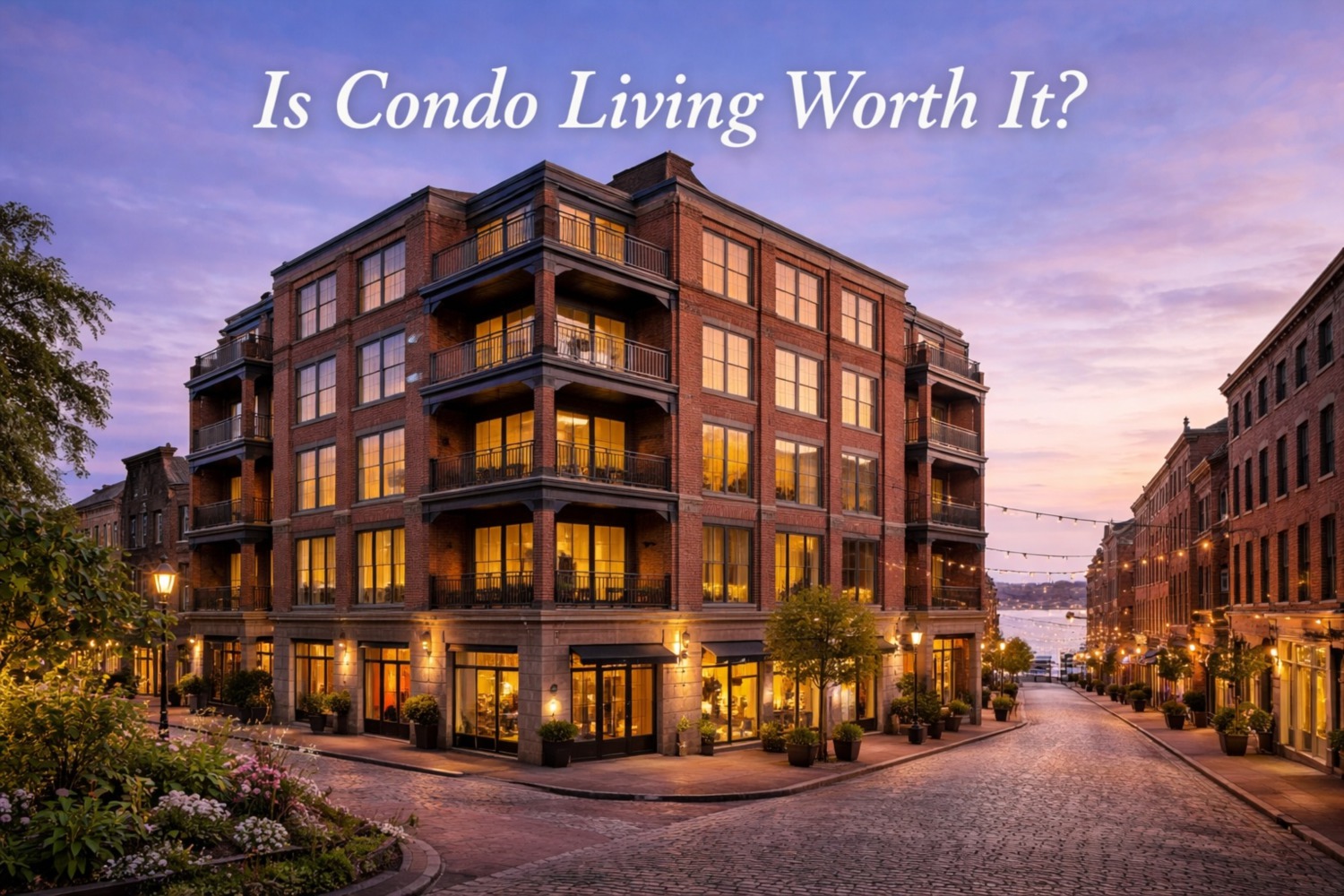
The condominium market in Portland and South Portland has experienced remarkable growth over the past decade, transforming these vibrant Maine communities into sought-after destinations for buyers seeking urban convenience combined with New England charm. Whether you’re a first-time condo buyer, a downsizer looking to simplify, or an investor seeking rental income, understanding the nuances of Portland and South Portland’s condo market is essential to making an informed decision. From waterfront penthouses in the Old Port to charming brownstone conversions in the West End, and from modern developments in South Portland’s Knightville to classic New England condos along Willard Beach, the options are diverse and compelling. This comprehensive guide walks you through everything you need to know about buying a condo in these dynamic Southern Maine markets.
Understanding Portland’s Neighborhood Condo Markets
Portland‘s condo market is concentrated in several distinct neighborhoods, each with its own character, price range, and lifestyle appeal. The West End, with its tree-lined streets and Victorian architecture, offers converted historic homes and newer condo buildings ranging from $350,000 to $650,000. These units attract residents who value walkability, proximity to local shops and restaurants, and excellent schools. East End condos near the Eastern Promenade command premium prices ($450,000 to $750,000+) due to water views, parks, and proximity to downtown. Munjoy Hill, one of Portland’s most desirable neighborhoods, features a mix of converted apartments and purpose-built condos ($300,000 to $550,000) with strong community feel and accessibility to retail and dining options on Congress Street. The Old Port, Portland’s historic heart, offers luxury and lifestyle condos ($400,000 to $1,000,000+) in converted warehouses and new construction, with walkability to shops, galleries, and waterfront dining. Bayside, increasingly popular with professionals, provides more affordable options ($280,000 to $450,000) while maintaining excellent walkability and proximity to downtown amenities.
Portland’s median condo price has increased approximately 8 to 12% annually over the past three years, with waterfront and near-waterfront properties appreciating even faster than inland units.
South Portland’s Condo Opportunities
South Portland offers compelling condo options for buyers seeking slightly more space and value while remaining close to Portland’s amenities. Knightville, the neighborhood’s primary commercial hub, features modern condos ($320,000 to $550,000) with easy commute access via Route 9 to downtown Portland, typically 10-15 minutes. Mill Creek, South Portland’s highest-growth area, offers newer construction condos ($350,000 to $600,000) in well-planned communities with amenities and common green space. Willard Beach, South Portland’s crown jewel, commands premium pricing ($500,000 to $900,000+) for proximity to one of Southern Maine’s finest beaches and access to the scenic Back Cove walking trail. These neighborhoods appeal to buyers willing to trade the density and walkability of Portland for more space, newer construction, and slightly lower price points. South Portland’s location also provides excellent access to both Portland’s cultural amenities and the beaches and natural areas of Cape Elizabeth and Scarborough.
Looking for a Condo in Portland or South Portland?
Our buyer agents know the condo market inside and out, from HOA governance to neighborhood dynamics. Whether you’re buying your first condo or making a strategic investment, we’re here to help. Talk to a Buyer Agent.
HOA Fees and What They Cover
Homeowners association (HOA) fees are a critical component of condo ownership costs and vary significantly based on building age, amenities, and maintenance requirements. In Portland’s urban condos, HOA fees typically range from $150 to $400 monthly, while South Portland’s newer construction communities may run $200 to $500 monthly depending on the scope of common areas. These fees cover building maintenance and insurance, snow removal, landscaping, trash service, and reserve funds for major repairs. Water and sewer are often included in Portland condo fees, while South Portland communities vary. Some buildings with pools, fitness centers, or concierge services charge premium fees ($400 to $600+). Before making an offer, obtain the complete HOA documentation including the budget, reserve study, and any pending special assessments. A healthy reserve fund (typically 20 to 30% of annual budget) indicates proper maintenance planning. Review the association’s meeting minutes to understand any contentious issues or planned capital improvements that might require special assessments.
Red Flags in Condo Association Governance
Careful review of condo association documents reveals much about the building’s financial health and management quality. Major red flags include low reserve funds (under 15% of annual budget), a history of special assessments, frequent turnover of board members or management companies, and large numbers of units in foreclosure or short sale. Litigation between the association and owners, or against contractors for construction defects, can affect your investment and increase fees. Review the building’s insurance coverage, as inadequate insurance is increasingly common and can leave owners liable for major repairs. Check whether the building is currently undergoing or facing major repairs like roof replacement, facade work, or foundation issues. High vacancy rates in rental-heavy buildings may indicate management problems or poor investment potential. Interview current owners about their satisfaction with management and the association’s responsiveness to maintenance issues. For buildings less than ten years old, investigate whether all construction defect claims have been resolved or if litigation is pending.
Thorough review of HOA documents and reserve studies can reveal $50,000+ in potential special assessments, protecting you from unexpected costs after purchase.
Price Ranges and Market Positioning by Neighborhood
Understanding price ranges helps position your search and identify value opportunities. Portland’s downtown core (Old Port, Western Promenade, East End) ranges $400,000 to $1,000,000+ with most activity in the $500,000 to $700,000 range. These premium neighborhoods command higher prices due to walkability, views, and cultural amenities. Portland’s residential neighborhoods (West End, Munjoy Hill, Bayside) range $280,000 to $650,000 with most sales in the $400,000 to $550,000 range, offering better value while maintaining urban convenience. South Portland’s Knightville and Mill Creek range $320,000 to $600,000, offering newer construction and community amenities at slightly lower price points than comparable Portland neighborhoods. South Portland’s Willard Beach ranges $500,000 to $900,000+, competing directly with Portland’s premium locations based on beach proximity and water access. Comparable sales analysis within your target neighborhood is essential, as what sold three months ago in the West End may be outdated as the market evolves. For the latest market data, see our Greater Portland home values overview. Work with an agent familiar with your target neighborhoods who can provide market trend data and identify homes with true value.
Waterfront and Near-Waterfront Condos: Premium Pricing and Considerations
Waterfront condos command significant premiums: Portland’s Eastern Promenade and Old Port waterfront units typically run $600,000 to $1,200,000+ depending on view quality and unit size. Willard Beach waterfront commands comparable premiums. While water views appreciate faster than inland properties, waterfront condos face higher maintenance costs, potential flooding/storm surge exposure, and restrictions on modifications due to coastal zone regulations. Carefully review flood zone designations (FEMA maps), flood insurance requirements, and the building’s history of storm damage. Waterfront building exteriors require more frequent maintenance and painting. Review the building’s seawall or foundation condition. Consider climate resilience: how is the building designed to handle nor’easters and increased storm intensity? For more on the nuances of waterfront ownership, see our Maine waterfront property guide. Near-waterfront condos (within 2-3 blocks of water, like Back Cove properties in South Portland) offer water view potential with reduced premium pricing and lower flood risk. These properties typically appreciate well while maintaining more reasonable price points.
Own a Condo in Portland or South Portland?
If you’re thinking about selling your condo, understanding your current market value is the first step. Our team can provide a complimentary valuation and help you navigate the selling process. Get Your Free Home Valuation | Selling Costs Guide.
New Condo Developments: Opportunities and Cautions
Portland and South Portland have seen significant new condo development activity. New construction offers energy efficiency, modern amenities, and warranty coverage unavailable in older properties. However, new developments carry specific considerations. Verify the developer’s financial stability; if the project fails to sell out, early buyers may face assessment obligations for remaining units. Review construction quality and schedule, as delays are common and affect closing timelines. Understand the builder’s warranty coverage and what defects it covers. New buildings often have special HOA assessments as original landscaping, parking lot sealcoating, and other capital items require replacement within 5-10 years. Many new buildings in Portland’s waterfront areas and South Portland’s Mill Creek offer energy-efficient construction, modern amenities (fitness centers, rooftop decks, EV charging), and low initial HOA costs that rise significantly as capital needs emerge. For new construction, working with an agent who has access to pre-sale opportunities and can negotiate concessions (upgraded appliances, finished basements, extended warranties) is valuable.
Financing Condos: Different From Single-Family Homes
Condo financing involves additional lender scrutiny compared to single-family purchases. Lenders evaluate the condo association’s financial health, reserve fund adequacy, and litigation history. Buildings with inadequate reserves, ongoing litigation, or high delinquency rates may be unfinanceable through conventional mortgages. FHA loans, popular for first-time buyers, have strict condo project requirements: maximum commercial square footage, owner-occupancy requirements, and approval of specific buildings. Some Portland and South Portland condos don’t meet FHA requirements, limiting your buyer pool if you later sell. Condo financing typically requires larger down payments than single-family homes, with many lenders requiring 15 to 20% down versus 10 to 15% for houses. Interest rates may be slightly higher for condos. Some new construction properties offer builder financing incentives or rate buydowns that can reduce your effective interest rate. The appraisal process differs for condos: lenders focus on comparable recent sales within the building or nearby buildings. If comparable sales are few, appraisals can be lower than expected. Get pre-approved for condo purchases early, as the process often takes longer due to association document review. For a broader look at navigating the buying process, see our complete guide to buying a home in Maine.
The Condo Inspection and Due Diligence Process
Standard home inspections apply to condos, but condo-specific due diligence is equally important. Your inspector should evaluate your unit for construction defects, but also note any visible building systems issues, exterior condition, and parking structure integrity. Request the condo’s reserve study, which is a detailed engineering assessment identifying major capital needs over 10-30 years with cost estimates. A healthy reserve study indicates professional management; its absence is concerning. Review 12 months of HOA meeting minutes to understand current issues, pending assessments, and governance quality. Obtain copies of all building insurance policies and confirm coverage is adequate. Ask about pending or past litigation between the association and owners, contractors, or insurance companies. If the building is over 30 years old, obtain the most recent engineering report covering the roof, foundation, parking structure, and building envelope. For waterfront buildings, request the engineer’s assessment of seawall or foundation condition. Interview 2-3 current residents about satisfaction with management, maintenance quality, and the association’s responsiveness. Request a “condo estoppel letter” from the association documenting all fees, pending assessments, and association status, as this protects you from surprise costs after closing.
Investment Potential and Rental Restrictions
Some buyers purchase Portland and South Portland condos as investments, renting to tenants. Before purchasing with this strategy, verify the association permits rentals. Some buildings restrict rentals to no more than 25 to 30% of units to maintain owner-occupancy and community stability. Others prohibit rentals entirely. Rental-heavy buildings attract more lenient lender scrutiny. For investment purposes, calculate cap rates by comparing purchase price to annual net rental income. Portland’s downtown condos, especially Old Port and Eastern Promenade units, attract tenants seeking walkable urban living, supporting premium rental rates ($2,000 to $3,500/month for one-bedroom units). South Portland condos appeal to a range of renters, with Knightville and Mill Creek units renting for $1,800 to $2,800/month. The rental market in these neighborhoods remains strong due to limited rental inventory and high demand from professionals seeking walkable neighborhoods. However, remember that condo ownership involves risks: vacancy periods, problem tenants, maintenance emergencies, and association issues that affect cash flow. Successful condo investors in Portland understand the local rental market, property management, and maintain adequate reserves for unexpected costs. For a deeper look at investment strategy, see our Maine investment property and vacation rental guide.
Seasonal Market Patterns and Timing Your Purchase
Portland’s condo market follows seasonal patterns with implications for timing. Spring (April-June) sees peak activity as buyers emerge after winter and sellers list before summer. Inventory is highest, but so is competition. Fall (September-October) offers a secondary peak as summer visitors depart and local buyers return. Winter (December-February) shows lowest inventory and activity, creating less competition if you’re a serious buyer. Summer (July-August) sees seasonal resident relocations and tourist-driven activity in the Old Port area. Buying in off-season (January-March) offers negotiation advantages due to reduced buyer competition, though selection is limited. For condos in new developments, spring launches typically offer the best pricing and selection before the project sells out. If you’re relocating to Portland from elsewhere, fall represents optimal timing to search while inventory is adequate and the market is less intense than spring.
Relocating to Maine?
A condo can be a great way to get established in Portland or South Portland while you explore the area. We offer relocation assistance to help you find the right neighborhood and navigate the condo buying process. Contact Us About Relocation Services | Read Our Relocation Guide.
Frequently Asked Questions About Buying a Condo in Portland or South Portland
What’s the difference between a condo and a townhouse?
Condos are individually owned units within a larger building or complex, where you own the interior space but the building exterior and common areas are collectively owned and managed by the association. Townhouses are typically standalone or semi-attached structures where you own the entire building and land. Townhouses have lower HOA costs and more control over modifications, but require more maintenance responsibility. In Portland and South Portland, most multifamily properties marketed as “condos” are urban-style building units, while townhouses are less common. Financing and legal responsibilities differ between the two.
How much should HOA fees be and what do they typically cover?
Portland area condo HOA fees range from $150 to $600+ monthly depending on building amenities and age. Fees cover building maintenance and repairs, insurance, snow removal, landscaping, trash, and water/sewer (often). A reasonable baseline is that HOA fees should not exceed 25 to 30% of your total housing cost (mortgage, taxes, insurance, HOA). Carefully review what’s included in your building’s fees and whether any utilities are covered. Buildings with pools, fitness centers, or doormen charge significantly more. Ask current owners whether fees have increased substantially in recent years, as consistent large increases suggest deferred maintenance or reserve fund issues.
What should I look for in a condo’s reserve study?
A reserve study is an engineering assessment identifying major capital needs and costs over the next 10-30 years (roof replacement, parking lot paving, exterior painting, window replacement, etc.). Healthy buildings maintain reserve funds equal to 20 to 30% of annual operating budgets. The study should be conducted by a professional reserve analyst, updated every 3-5 years, and presented in detail at annual meetings. If a reserve study is missing, outdated, or inadequate, this is a major red flag. Buildings with proper reserve studies rarely need surprise special assessments. Inadequate reserves mean you’ll likely face large assessments within 5-10 years of ownership.
Can I rent my condo after purchasing?
This depends entirely on the specific building’s governing documents. Some associations permit rentals without restriction, some limit rentals to a percentage of units (25 to 30%), and others prohibit rentals entirely. If rental plans are part of your strategy, verify rental allowances before making an offer. Buildings that prohibit or restrict rentals may have lower resale values and appeal to a narrower buyer pool. Additionally, even where rentals are permitted, you must maintain homeowner’s insurance (not landlord’s insurance), which is a separate underwriting class, and your mortgage should be underwritten for a non-owner-occupied property if the unit will be rented from closing.
How does buying a condo affect my mortgage and down payment requirements?
Condo financing typically requires larger down payments than single-family homes. Many conventional lenders require 15 to 20% down for condos versus 10 to 15% for houses. FHA loans can go lower but have strict condo project requirements, and not all Portland/South Portland buildings are FHA-approved. Condo loans take slightly longer to approve due to lender review of association documents, reserve studies, and budget information. Get pre-approved early and ensure your lender is experienced with condo financing. Some buildings won’t sell to buyers unless they’re pre-approved, as the association may restrict sales to buyers without strong financing. Work with a lender experienced in Maine condo financing who understands local buildings and can navigate approval efficiently.
What are the best neighborhoods for first-time condo buyers?
Bayside in Portland ($280,000 to $450,000) and Knightville in South Portland ($320,000 to $550,000) offer the most accessible entry points while maintaining excellent walkability and proximity to amenities. Both neighborhoods are appreciating well, making them strong choices for building equity. For more on navigating the buying process, see our first-time buyer’s guide to Greater Portland.
How does condo living compare to single-family home ownership in Southern Maine?
Condos offer lower maintenance responsibility, walkability, and urban convenience, often at lower purchase prices. Single-family homes offer more space, privacy, and control over your property. The right choice depends on your lifestyle priorities. Some buyers start with a condo and later transition to a single-family home as their needs evolve. If you’re considering downsizing from a single-family home to a condo, our dedicated guide covers the financial and lifestyle considerations in detail.
What should relocators know about buying a condo in Portland?
Portland condos are popular with relocators because they offer a low-maintenance entry point into the community. Condos in walkable neighborhoods let you explore the city on foot while settling in. Start by renting in your target neighborhood if possible, then buy once you understand the market. Portland’s condo market moves quickly, so get pre-approved before you start your search. For the full picture on making the move, see our guide to relocating from Boston or New York to Maine.
Browse current listings: Portland homes for sale | South Portland homes for sale | Scarborough homes for sale | Falmouth homes for sale
Explore Southern Maine communities: Portland | South Portland | Scarborough | Cape Elizabeth | Falmouth & Cumberland | Gorham, Windham & Westbrook | Kennebunk & Kennebunkport | York & Kittery
Ready to Find Your Portland or South Portland Condo?
Navigating the Portland and South Portland condo market requires deep local knowledge, understanding of association governance and financing nuances, and careful due diligence. Bean Group specializes in Portland area condos and brings years of experience helping buyers identify value, negotiate effectively, and avoid costly mistakes. Whether you’re seeking a West End walkup, an Old Port waterfront investment, or a spacious South Portland condo, our team understands each neighborhood’s unique character, market trends, and future appreciation potential.
Get Your Free Home Valuation | Schedule Your Consultation | Talk to a Buyer Agent | Relocation Assistance